📋 Key Takeaways
- In-home care agencies provide personalized care in the comfort of the client’s own home.
- Licensed assisted living facilities offer a community-based living arrangement with access to care and support services.
- The cost of elderly care options varies widely, depending on factors such as location, level of care, and services required.
- When choosing between in-home care agencies and licensed assisted living facilities, it’s essential to consider the individual’s needs, preferences, and budget.
- Both options have their pros and cons, and a thorough evaluation is necessary to make an informed decision.
📑 Table of Contents
Introduction to Elderly Care Options
As the population ages, the demand for elderly care options is increasing. With over 47 million Americans aged 65 and older, the need for quality care services is becoming more pressing. Elderly care options range from in-home care agencies to licensed assisted living facilities, each with its pros and cons. In this article, we will delve into the world of elderly care options, exploring the benefits and drawbacks of in-home care agencies and licensed assisted living facilities.
Statistics on Elderly Care
According to the National Institute on Aging, 70% of people aged 65 and older will require some form of long-term care. With the increasing demand for elderly care services, it’s essential to understand the options available and make informed decisions.
As we explore the world of elderly care options, it’s crucial to consider the individual’s needs, preferences, and budget. In the next section, we will take an in-depth look at in-home care agencies.
In-Depth Analysis of In-Home Care Agencies
In-home care agencies provide personalized care in the comfort of the client’s own home. These agencies offer a range of services, including:
- Personal care and hygiene assistance
- Medication management
- Light housekeeping and meal preparation
- Companionship and socialization
In-home care agencies are ideal for individuals who prefer to remain in their own homes and require minimal to moderate care. With in-home care, clients can maintain their independence and receive care tailored to their specific needs.
Benefits of In-Home Care
The benefits of in-home care include:
- Personalized care in the comfort of one’s own home
- Flexibility in care scheduling and services
- Cost-effective compared to assisted living facilities
- Promotes independence and autonomy
However, in-home care agencies may not be suitable for individuals with complex medical needs or those requiring 24/7 care. As we explore the pros and cons of in-home care, it’s essential to consider the alternative option: licensed assisted living facilities.
Comprehensive Overview of Licensed Assisted Living Facilities
Licensed assisted living facilities offer a community-based living arrangement with access to care and support services. These facilities provide:
- Private or shared living spaces
- Meal preparation and dining services
- Housekeeping and laundry services
- Medication management and medical care
- Recreational activities and social events
Assisted living facilities are ideal for individuals who require moderate to high levels of care and prefer a community-based living arrangement.
Benefits of Assisted Living
The benefits of assisted living include:
- Access to 24/7 care and support services
- Socialization and community engagement opportunities
- On-site amenities and activities
- Peace of mind for family members and caregivers
As we weigh the pros and cons of in-home care agencies and licensed assisted living facilities, it’s crucial to consider the costs, services, and benefits of each option. In the next section, we will compare the costs and services of in-home care and assisted living.
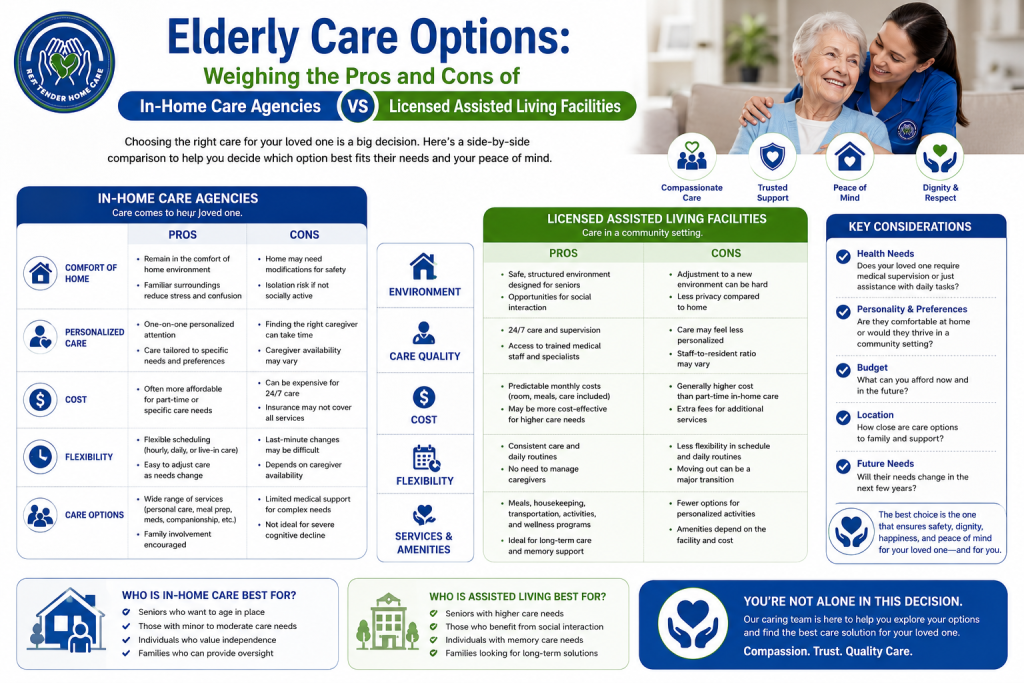
Comparison of Costs, Services, and Benefits
The cost of elderly care options varies widely, depending on factors such as location, level of care, and services required.
When comparing the costs and services of in-home care and assisted living, it’s essential to consider the individual’s needs and preferences. In-home care may be more cost-effective for individuals with minimal care needs, while assisted living facilities may be more suitable for those requiring moderate to high levels of care.
Case Studies and Testimonials
Real-life examples and testimonials can provide valuable insights into the effectiveness of in-home care agencies and licensed assisted living facilities. For instance, a study by the National Institute on Aging found that 90% of seniors prefer to age in place, highlighting the importance of in-home care services.
As we explore the world of elderly care options, it’s essential to consider the individual’s needs, preferences, and budget. In the next section, we will provide a conclusion and decision-making guide to help families and caregivers make informed decisions.
Conclusion and Decision-Making Guide
In conclusion, elderly care options range from in-home care agencies to licensed assisted living facilities, each with its pros and cons. When choosing between these options, it’s essential to consider the individual’s needs, preferences, and budget. By weighing the costs, services, and benefits of each option, families and caregivers can make informed decisions and ensure that their loved ones receive the best possible care.
As we navigate the complex world of elderly care, it’s crucial to prioritize the individual’s needs and well-being. By providing personalized care and support, we can promote independence, dignity, and quality of life for our loved ones.
❓ Frequently Asked Questions
Q: What is the difference between in-home care agencies and licensed assisted living facilities?
In-home care agencies provide personalized care in the comfort of the client’s own home, while licensed assisted living facilities offer a community-based living arrangement with access to care and support services.
Q: How much does in-home care cost?
The cost of in-home care varies widely, depending on factors such as location, level of care, and services required. On average, in-home care agencies charge between $20 to $50 per hour.
Q: What services are typically provided by assisted living facilities?
Assisted living facilities provide a range of services, including private or shared living spaces, meal preparation and dining services, housekeeping and laundry services, medication management and medical care, and recreational activities and social events.
Q: How do I choose between in-home care agencies and licensed assisted living facilities?
When choosing between in-home care agencies and licensed assisted living facilities, it’s essential to consider the individual’s needs, preferences, and budget. By weighing the costs, services, and benefits of each option, families and caregivers can make informed decisions and ensure that their loved ones receive the best possible care.
Q: What are the benefits of in-home care?
The benefits of in-home care include personalized care in the comfort of one’s own home, flexibility in care scheduling and services, cost-effectiveness compared to assisted living facilities, and promotion of independence and autonomy.
Q: What are the benefits of assisted living facilities?
The benefits of assisted living facilities include access to 24/7 care and support services, socialization and community engagement opportunities, on-site amenities and activities, and peace of mind for family members and caregivers.