📋 Key Takeaways
- Assisted living facilities and home care services are two popular senior care options, each with its own set of benefits and drawbacks.
- Assisted living facilities provide a community-based living environment with access to care and support services, while home care services allow seniors to receive care in the comfort of their own homes.
- The cost of assisted living facilities and home care services varies widely depending on factors such as location, level of care, and services required.
- When choosing between assisted living facilities and home care services, it’s essential to consider factors such as the senior’s needs, preferences, and budget.
- Researching and comparing different senior care options can help families make informed decisions and find the best fit for their loved ones.
📑 Table of Contents
Introduction to Senior Care Options
As the population ages, the demand for senior care services is increasing. With so many options available, it can be overwhelming for families to navigate the complex world of senior care. Two popular options are assisted living facilities near me and home care services for seniors. In this article, we will delve into the world of senior care, exploring the benefits and drawbacks of each option. For a comprehensive guide to senior care services, visit our article on The Ultimate Guide to Senior Care Services.
Understanding Assisted Living Facilities
Assisted living facilities provide a community-based living environment with access to care and support services. These facilities offer a range of services, including meals, housekeeping, and transportation. According to the National Center for Assisted Living, there are over 28,000 assisted living facilities in the United States, providing care to over 750,000 residents. For more information on assisted living facilities, read our article on Unlocking the Best Assisted Living Facilities Near Me.
Benefits of Assisted Living Facilities
Some benefits of assisted living facilities include:
- Social interaction and community engagement
- Access to care and support services
- Meal preparation and housekeeping services
- Transportation services
Exploring Home Care Services for Seniors
Home care services allow seniors to receive care in the comfort of their own homes. These services can include personal care, such as bathing and dressing, as well as homemaking services, such as cleaning and laundry. According to the National Association for Home Care and Hospice, there are over 12,000 home care agencies in the United States, providing care to over 12 million patients. For a comprehensive comparison of home care services, visit our article on Home Care Services for Seniors.
Benefits of Home Care Services
Some benefits of home care services include:
- Personalized care and attention
- Familiarity and comfort of home
- Flexibility and customization of services
- Cost-effectiveness
Comparison of Assisted Living Facilities and Home Care Services
When comparing assisted living facilities and home care services, it’s essential to consider factors such as cost, level of care, and services required. Assisted living facilities can provide a sense of community and social interaction, while home care services offer personalized care and attention. For a detailed comparison of in-home care agencies and licensed assisted living facilities, read our article on Elderly Care Options.
Factors to Consider When Choosing Senior Care
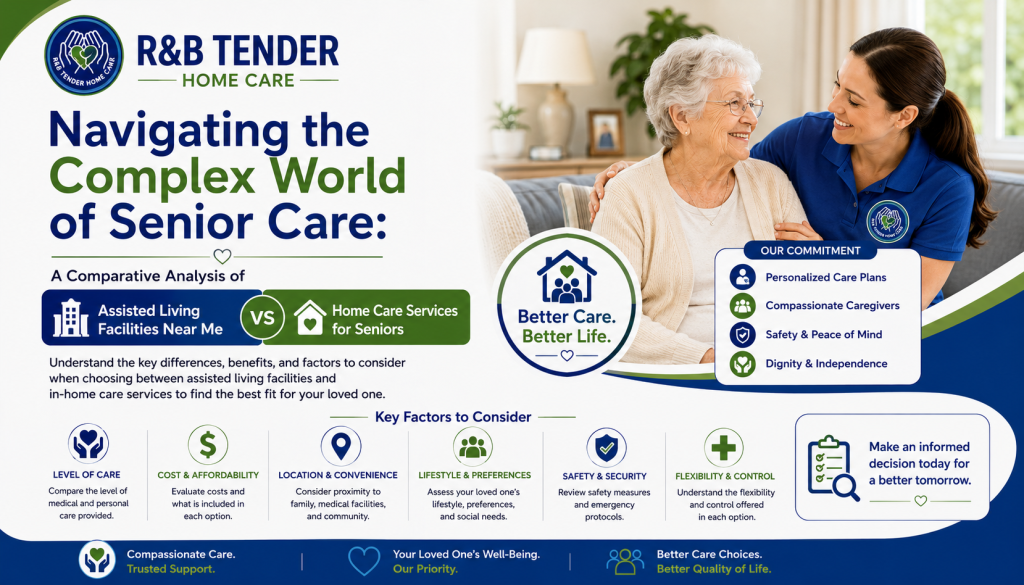
When choosing between assisted living facilities and home care services, it’s essential to consider factors such as:
- Senior’s needs and preferences
- Level of care required
- Cost and budget
- Location and accessibility
For a step-by-step guide to choosing the best assisted living facilities, visit our article on Finding the Perfect Fit.
Conclusion
Navigating the complex world of senior care can be overwhelming, but by understanding the benefits and drawbacks of assisted living facilities and home care services, families can make informed decisions. By considering factors such as cost, level of care, and services required, families can find the best fit for their loved ones. For more information on senior care options, visit our website at RBTender Home Care.
❓ Frequently Asked Questions
Q: What is the difference between assisted living facilities and home care services?
Assisted living facilities provide a community-based living environment with access to care and support services, while home care services allow seniors to receive care in the comfort of their own homes.
Q: What services are typically included in home care services?
Home care services can include personal care, such as bathing and dressing, as well as homemaking services, such as cleaning and laundry. Additional services may include meal preparation, transportation, and medication management.
Q: How do I choose the best assisted living facility for my loved one?
When choosing an assisted living facility, consider factors such as location, level of care, and services required. It’s also essential to research the facility’s reputation, read reviews, and visit the facility in person.
Q: Can I customize home care services to meet my loved one’s needs?
Yes, home care services can be customized to meet the individual needs of your loved one. This may include creating a personalized care plan, scheduling care visits, and selecting specific services and caregivers.
Q: Are assisted living facilities and home care services covered by Medicare or Medicaid?
Medicare and Medicaid coverage for assisted living facilities and home care services varies depending on the specific services and location. It’s essential to research and understand the coverage options available to your loved one.
Q: What is the process for transitioning my loved one to an assisted living facility or home care services?
The process for transitioning to an assisted living facility or home care services typically involves assessing your loved one’s needs, creating a care plan, and coordinating logistics such as transportation and medication management.