📋 Key Takeaways
- There are numerous elderly care options available, including residential care homes, in-home care agencies, and licensed assisted living facilities.
- Each type of care has its unique benefits and drawbacks, and the best option for a senior depends on their individual needs and preferences.
- Residential care homes provide a more intimate and personalized care experience, while in-home care agencies offer flexibility and convenience.
- Licensed assisted living facilities offer a range of services and amenities, from basic care to advanced medical care.
- It’s essential to research and compares the top elderly care options to find the best fit for a senior’s needs and budget.
📑 Table of Contents
Introduction to Elderly Care Options
As the population ages, the demand for elderly care options is increasing. With so many options available, it can be overwhelming to choose the best care for a senior. According to the National Institute on Aging, approximately 70% of people over the age of 65 will require some form of long-term care. In this article, we will explore the top elderly care options and provide a comprehensive review of residential care homes, in-home care agencies, and licensed assisted living facilities.
Why Choose the Right Elderly Care Option?
Choosing the right elderly care option is crucial for a senior’s well-being and quality of life. The right care option can provide a senior with the support and care they need to live a fulfilling life. On the other hand, the wrong care option can lead to decreased mobility, social isolation, and a decline in overall health. For more information on choosing the right care option, visit our article on Unlocking the Best Assisted Living Facilities Near Me: A Comprehensive Guide to Senior Care Services.
Overview of Residential Care Homes
Residential care homes, also known as board and care homes, provide a more intimate and personalized care experience. These homes typically have a small number of residents, usually between 2-10, and offer a family-like atmosphere. Residential care homes provide a range of services, including meal preparation, medication management, and assistance with daily living activities.
Benefits of Residential Care Homes
The benefits of residential care homes include:
- A more personalized care experience
- A smaller, more intimate environment
- Flexibility in care services and schedules
- Often less expensive than other care options
However, residential care homes may have limitations, such as limited space and resources. For more information on residential care homes, visit our article on The Ultimate Guide to Senior Care Services: Navigating Residential Care Homes, Home Care Services for Seniors, and More.
Overview of In-Home Care Agencies
In-home care agencies provide care services in the comfort of a senior’s own home. These agencies offer a range of services, including personal care, light housekeeping, and meal preparation. In-home care agencies can provide flexibility and convenience, as care services can be tailored to a senior’s individual needs and schedule.
Benefits of In-Home Care Agencies
The benefits of in-home care agencies include:
- Flexibility in care services and schedules
- Convenience of receiving care in the comfort of one’s own home
- Ability to maintain independence and autonomy
- Often less expensive than other care options
However, in-home care agencies may have limitations, such as limited access to medical care and social interaction. For more information on in-home care agencies, visit our article on Elderly Care Options: Weighing the Pros and Cons of In-Home Care Agencies vs Licensed Assisted Living Facilities.
Overview of Licensed Assisted Living Facilities
Licensed assisted living facilities provide a range of services and amenities, from basic care to advanced medical care. These facilities typically have a larger number of residents, usually between 20-100, and offer a social and interactive environment.
Benefits of Licensed Assisted Living Facilities
The benefits of licensed assisted living facilities include:
- A range of services and amenities, including medical care and social activities
- A social and interactive environment
- Access to on-site amenities, such as dining rooms and activity centers
- Often more comprehensive care services than other options
However, licensed assisted living facilities may have limitations, such as a larger and more institutional environment. For more information on licensed assisted living facilities, visit our article on Finding the Perfect Fit: A Step-by-Step Guide to Choosing the Best Assisted Living Facilities Near Me.
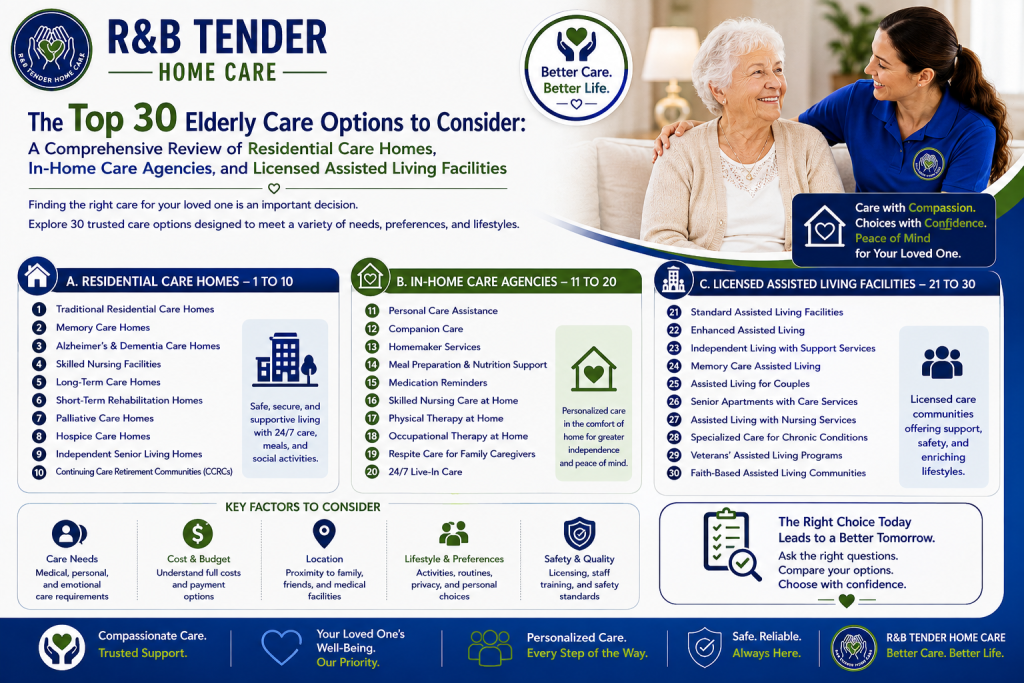
Comparison of the Top 30 Elderly Care Options
Comparing the top 30 elderly care options can be a daunting task. To make it easier, we’ve compiled a list of the top care options, including residential care homes, in-home care agencies, and licensed assisted living facilities. We’ve also included a comparison of the pros and cons of each care option, as well as the costs and services offered.
Top 30 Elderly Care Options
Here are the top 30 elderly care options:
- Residential care homes
- In-home care agencies
- Licensed assisted living facilities
- Adult day care programs
- Home health care services
For more information on the top 30 elderly care options, visit our article on Home Care Services for Seniors: A Comprehensive Comparison of In-Home Care Agencies and Residential Care Homes.
Conclusion and Recommendations
In conclusion, choosing the right elderly care option is crucial for a senior’s well-being and quality of life. We recommend researching and comparing the top elderly care options to find the best fit for a senior’s needs and budget. We also recommend considering the pros and cons of each care option, as well as the costs and services offered.
Final Recommendations
Our final recommendations include:
- Researching and comparing the top elderly care options
- Considering the pros and cons of each care option
- Evaluating the costs and services offered
- Visiting and touring potential care facilities
- Asking questions and seeking advice from care professionals
❓ Frequently Asked Questions
Q: What are the different types of elderly care options?
There are several types of elderly care options, including residential care homes, in-home care agencies, and licensed assisted living facilities.
Q: How do I choose the right elderly care option for my loved one?
Choosing the right elderly care option involves researching and comparing the top care options, considering the pros and cons of each, and evaluating the costs and services offered.
Q: What are the benefits of residential care homes?
The benefits of residential care homes include a more personalized care experience, a smaller and more intimate environment, and flexibility in care services and schedules.
Q: What are the benefits of in-home care agencies?
The benefits of in-home care agencies include flexibility in care services and schedules, convenience of receiving care in the comfort of one’s own home, and ability to maintain independence and autonomy.
Q: What are the benefits of licensed assisted living facilities?
The benefits of licensed assisted living facilities include a range of services and amenities, a social and interactive environment, and access to on-site amenities, such as dining rooms and activity centers.
Q: How do I pay for elderly care options?
There are several ways to pay for elderly care options, including private pay, Medicaid, and veterans’ benefits. It’s essential to research and understand the payment options available to determine the best fit for a senior’s needs and budget.