📋 Key Takeaways
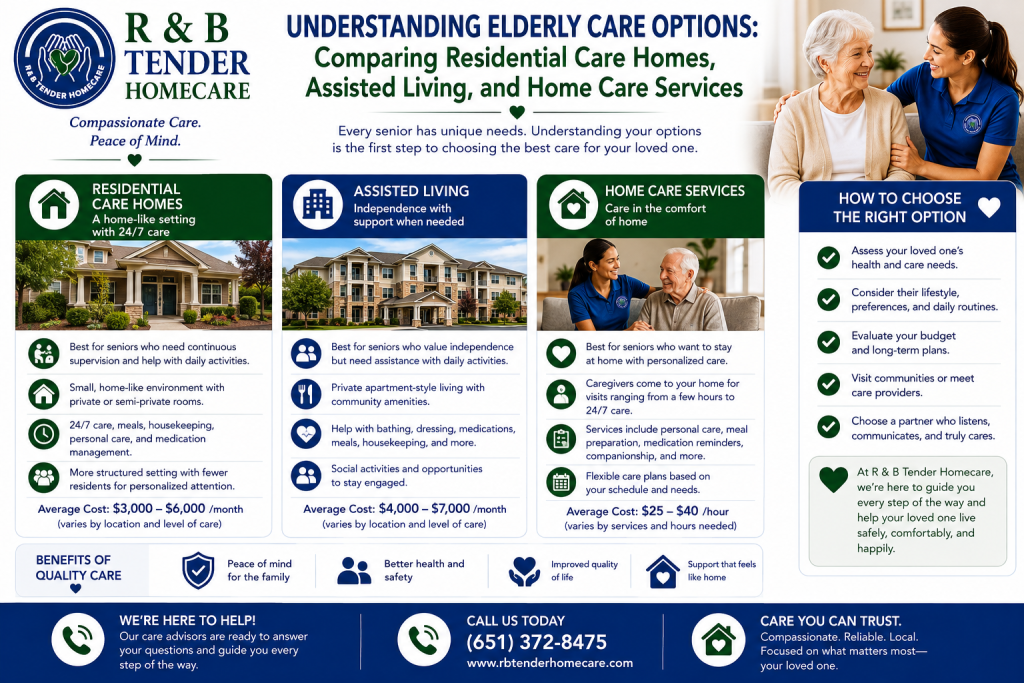
- Residential care homes, assisted living facilities, and home care services each support different levels of independence, safety, and daily assistance.
- The best option depends on the senior’s health, mobility, cognitive needs, lifestyle preferences, family support, and budget.
- Home care services for seniors allow older adults to remain in familiar surroundings while receiving personalized assistance.
- Residential care homes often provide a smaller, home-like setting, while assisted living communities may offer broader amenities and structured activities.
- Families should compare services, licensing, staffing, costs, safety, and future care needs before choosing an elderly care option.
📑 Table of Contents
- Introduction: Understanding Elderly Care Options
- 1. Residential Care Homes
- 2. Assisted Living Facilities
- 3. Home Care Services for Seniors
- Side-by-Side Comparison
- 4. Health and Mobility Needs
- 5. Independence and Lifestyle
- 6. Cost Considerations
- 7. How Families Can Choose the Right Option
- Senior Care Options in Minnesota
- ❓ Frequently Asked Questions
Introduction: Understanding Elderly Care Options
Choosing among different elderly care options can be challenging for families. An aging parent or loved one may want to remain independent, while family members may be concerned about safety, mobility, medications, meals, or social isolation.
Three of the most common options are residential care homes, assisted living facilities, and home care services for seniors.
Each model provides a different balance of independence, personal assistance, living environment, and cost.
The right decision should be based on the senior’s current needs while also considering how those needs may change over time.
1. Residential Care Homes
Residential care homes are generally smaller senior living settings designed to provide support in a more traditional, home-like environment.
Depending on the state, these settings may also be described as:
- Residential assisted living homes
- Adult family homes
- Board and care homes
- Personal care homes
Residential care homes may provide:
- Meals
- Personal care assistance
- Help with dressing and grooming
- Mobility assistance
- Housekeeping and laundry
- Medication-related support
- Companionship
- Daily supervision
A major benefit is the smaller environment. Seniors who prefer familiar routines and close relationships with caregivers may feel more comfortable in this setting.
However, available medical and specialized services vary by provider, so families should carefully review what the residence can and cannot provide.
2. Assisted Living Facilities
Assisted living facilities provide housing combined with supportive services for seniors who need help with everyday activities but still want to maintain independence.
These communities may range from smaller residences to larger buildings with private apartments and shared amenities.
Services can include:
- Bathing and dressing assistance
- Medication support
- Meals and nutrition
- Housekeeping
- Laundry
- Mobility support
- Social and recreational activities
- Transportation
- Emergency support
Larger assisted living facilities may also provide dining rooms, fitness programs, salons, activity spaces, libraries, and organized community outings.
This option can be attractive for seniors who want both personal support and regular opportunities for social interaction.
3. Home Care Services for Seniors
Home care services for seniors allow older adults to receive assistance while remaining in their own homes.
For many families, this is appealing because the senior does not have to leave familiar surroundings.
Depending on the provider, services may include:
- Bathing and grooming
- Dressing assistance
- Meal preparation
- Light housekeeping
- Laundry
- Medication reminders
- Mobility support
- Errands and shopping
- Companionship
- Respite care for family caregivers
In-home care can also be flexible. Some seniors may only need a few hours of assistance each week, while others require more frequent or extended support.
Families should distinguish between non-medical home care and skilled home health services when medical treatment is needed.
Residential Care Homes vs. Assisted Living vs. Home Care: Side-by-Side Comparison
| Factor | Residential Care Home | Assisted Living | Home Care Services |
|---|---|---|---|
| Living Environment | Small, home-like residence | Community or apartment-style setting | Senior remains at home |
| Personal Assistance | Available based on care needs | Available through individual care plans | Customized to the senior’s schedule |
| Socialization | Small-group environment | Broader activities and events | Primarily caregiver and family interaction |
| Independence | Moderate | Moderate to high | Often highest in familiar surroundings |
| Cost Structure | Usually monthly | Usually monthly plus possible service fees | Often hourly or scheduled service plans |
4. Consider Health and Mobility Needs
A senior’s physical health is one of the most important factors when choosing care.
Families should consider:
- Ability to walk safely
- History of falls
- Need for transfer assistance
- Personal hygiene needs
- Medication routines
- Chronic health conditions
- Cognitive changes
A senior with relatively minor needs may do well with scheduled home care.
Someone who needs consistent supervision may benefit from a residential care or assisted living setting.
If the senior requires complex medical treatment, families should also discuss whether skilled nursing or home health services are necessary.
5. Consider Independence and Lifestyle
Care decisions should not focus only on health.
Personality and lifestyle matter too.
Home care may be ideal for someone who values:
- Staying in a familiar home
- Privacy
- Flexible routines
- Frequent family involvement
Residential care may appeal to seniors who prefer:
- A quiet community
- Smaller social groups
- Consistent daily routines
Assisted living may be appealing for seniors who enjoy:
- Community activities
- Group dining
- Organized outings
- Meeting other older adults
6. Cost Considerations
The cost of senior care varies widely by location, care level, schedule, room type, and services.
Families should compare complete costs rather than advertised starting prices.
Ask about:
- Base monthly or hourly rates
- Personal care charges
- Medication support fees
- Transportation
- Meals
- Laundry and housekeeping
- Weekend or holiday charges
- Additional supervision
Home care may be more affordable for seniors who only need limited weekly support, while continuous in-home assistance can become more expensive.
7. How Families Can Choose the Right Option
Before making a decision, complete a simple needs assessment.
Ask:
- Can my loved one safely remain at home?
- How much help is needed with daily activities?
- Is frequent supervision required?
- Does the senior want more social interaction?
- How involved can family members remain?
- What care option fits the family budget?
- Could care needs increase in the near future?
Whenever possible, involve the senior in the decision.
Comfort, dignity, personal choice, and quality of life should remain central to the care plan.
Senior Care Options in Minnesota
Families exploring elderly care options in Minnesota should compare local providers based on services, licensing, safety, communication, location, and the senior’s individual needs.
R & B Tender Homecare provides information about home care, residential assisted living, staffing, and supportive care services for individuals and families in Minnesota.
Whether your loved one needs support at home or a residential setting, discussing their needs directly with a care provider can help determine the appropriate next step.
❓ Frequently Asked Questions
What are the main elderly care options?
Common options include home care services, residential care homes, assisted living facilities, memory care, and skilled nursing. The right choice depends on the senior’s needs.
What is the difference between home care and assisted living?
Home care brings support into the senior’s existing residence, while assisted living provides housing and supportive services within a senior living community.
Who is a residential care home best for?
A residential care home may be appropriate for seniors who need help with daily activities and prefer a smaller, quieter, home-like environment.
Is home care better than assisted living?
Neither option is automatically better. Home care may work well for seniors who want to remain at home, while assisted living may be better for those who need more regular support and social opportunities.
How do I choose the right senior care option?
Compare health needs, mobility, safety, independence, social preferences, family support, available services, and total cost before making a decision.