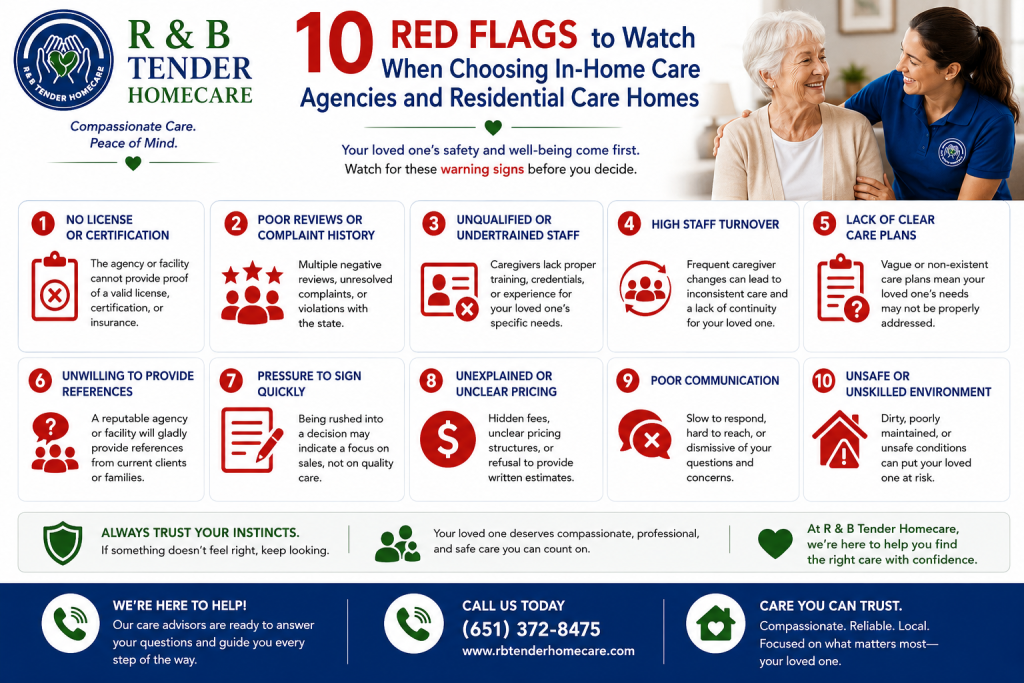
📋 Key Takeaways
- Always verify licensing, caregiver screening, insurance, and service credentials before choosing in-home care agencies or residential care homes.
- Unclear pricing, poor communication, and vague care plans can signal larger quality problems.
- Families should ask detailed questions about emergency response, medication support, staffing, and caregiver supervision.
- Repeated negative reviews, frequent caregiver changes, and pressure to sign quickly deserve extra caution.
- A written checklist can help families compare senior care providers objectively and avoid costly or unsafe decisions.
📑 Table of Contents
- Introduction: Why Red Flags Matter
- 1. Licensing or Credentials Are Unclear
- 2. Caregiver Screening Is Vague
- 3. Pricing Is Not Transparent
- 4. Communication Is Poor
- 5. No Personalized Care Plan
- 6. Weak Emergency Procedures
- 7. Repeated Negative Reviews
- 8. Staffing Appears Inadequate
- 9. Medication Policies Are Unclear
- 10. Families Are Left Out of Care Decisions
- Quick Senior Care Evaluation Checklist
- ❓ Frequently Asked Questions
Introduction: Why Red Flags Matter When Choosing Senior Care
Choosing a care provider for an aging parent, spouse, or loved one requires more than comparing prices and websites.
Whether you are evaluating in-home care agencies or residential care homes, the provider may become responsible for personal care, meals, mobility support, medication routines, supervision, and everyday safety.
A poor choice can create stress, inconsistent care, unexpected expenses, or safety concerns.
The following warning signs can help families identify potential problems before signing a contract or moving a loved one into a residential setting.
Red Flag #1: Licensing or Credentials Are Unclear
A reputable provider should be able to clearly explain the licenses, registrations, or other requirements that apply to its services.
Be cautious if the provider:
- Cannot provide basic licensing information.
- Gives inconsistent answers about regulatory oversight.
- Refuses to explain its business credentials.
- Cannot provide proof of appropriate insurance when requested.
Requirements vary by state, so families should verify information through the appropriate state agency.
Do not rely only on a logo, certificate image, or statement on a website.
Red Flag #2: Caregiver Screening Is Vague
Caregivers may spend significant time alone with vulnerable older adults, making screening extremely important.
Ask how caregivers are selected and whether the process includes:
- Criminal background checks
- Employment verification
- Professional references
- Relevant certification checks
- Driving-record review when transportation is provided
- Ongoing training
If an agency avoids discussing its hiring process or cannot explain how caregivers are supervised, that should raise concern.
Red Flag #3: Pricing Is Not Transparent
Unclear pricing is one of the easiest ways for families to face unexpected costs.
A professional provider should offer a written explanation of charges.
Look for details covering:
- Hourly or monthly rates
- Minimum visit requirements
- Weekend and holiday fees
- Transportation charges
- Medication-related services
- Personal care add-ons
- Cancellation fees
Avoid signing an agreement if the provider cannot clearly explain what is included and what costs extra.
Red Flag #4: Communication Is Poor
Communication during the first consultation often reflects how the provider may communicate after services begin.
Warning signs include:
- Calls or emails repeatedly going unanswered
- Vague answers to basic questions
- Difficulty identifying a primary contact
- Important information changing between conversations
- Staff appearing rushed or dismissive
Families should know exactly who to contact when they have a question, concern, schedule change, or emergency.
Red Flag #5: There Is No Personalized Care Plan
Senior care should not be one-size-fits-all.
A provider should understand the individual’s:
- Mobility
- Personal care needs
- Medication routines
- Meal preferences
- Cognitive health
- Daily schedule
- Social preferences
- Safety risks
If an in-home care agency or residential provider immediately recommends a generic package without completing an assessment, ask more questions.
The care plan should also be reviewed when needs change.
Red Flag #6: Emergency Procedures Are Weak or Unclear
Families should know what happens when something goes wrong.
Ask the provider how it handles:
- Falls
- Sudden illness
- Caregiver no-shows
- Medication concerns
- Severe weather
- Power outages
- Emergency evacuation
For home care, ask whether an on-call supervisor is available after normal business hours.
For residential settings, ask about emergency exits, evacuation procedures, fire safety, and staff response protocols.
Red Flag #7: There Are Repeated Negative Reviews or Complaints
One negative online review does not automatically mean a provider offers poor care.
Instead, look for patterns.
Repeated concerns about the same issues—such as missed visits, billing problems, caregiver behavior, cleanliness, or poor communication—deserve attention.
Families should:
- Read recent Google reviews.
- Check applicable state complaint or inspection resources.
- Ask the provider directly about serious complaints.
- Request references when appropriate.
A professional provider should be willing to explain how concerns are addressed.
Red Flag #8: Staffing Appears Inadequate or Constantly Changes
For residential care homes, observe whether staff appear able to respond to residents without constantly rushing.
For home care agencies, ask how often caregiver assignments change.
Warning signs can include:
- Frequent caregiver replacements
- Repeated missed or late visits
- Staff appearing overwhelmed
- No backup coverage
- Families receiving little notice about staffing changes
Consistency can be especially important for seniors with dementia, anxiety, or established routines.
Red Flag #9: Medication Policies Are Unclear
Medication support can involve significant safety responsibilities.
Families should understand exactly what the provider is authorized and trained to do.
Ask:
- Who handles medication assistance?
- How are medications documented?
- How are changes communicated?
- What happens if a dose is missed?
- How are concerns reported to the family or healthcare provider?
Be cautious if staff make broad medical claims or cannot clearly explain the limits of their role.
Red Flag #10: Families Are Excluded From Care Decisions
When appropriate and authorized by the senior, families can play an important role in coordinating care.
A good provider should have clear processes for:
- Sharing updates
- Reporting changes
- Receiving family feedback
- Reviewing the care plan
- Handling complaints
Families should not have to repeatedly chase the provider for basic information about scheduled care.
Quick Checklist for Comparing In-Home Care Agencies and Residential Care Homes
| Evaluation Item | Yes / No | Notes |
|---|---|---|
| Licensing or credentials verified | ||
| Caregiver background screening explained | ||
| Written pricing provided | ||
| Personalized care plan available | ||
| Emergency procedures clearly explained | ||
| Backup staffing available | ||
| Medication policy explained | ||
| Family communication process established |
Families exploring senior care services in Minnesota can learn more about home care and residential care options through R & B Tender Homecare.
Taking time to compare providers, ask detailed questions, and review written policies can help families make a safer and more confident decision.
❓ Frequently Asked Questions
What is the biggest red flag when choosing an in-home care agency?
Major warning signs include unclear caregiver screening, hidden fees, poor communication, no written care plan, and vague emergency procedures.
How can I check whether a residential care home is reputable?
Verify applicable licensing, review inspection information when available, tour the residence, speak with staff, examine safety conditions, and look for patterns in recent family reviews.
Should a home care agency provide written pricing?
Yes. Families should request written rates and details about additional charges, cancellation policies, minimum visits, weekends, holidays, and transportation.
Is frequent caregiver turnover a warning sign?
Frequent changes may affect continuity of care. Ask why caregivers change, how backup coverage works, and how families are notified when assignments change.
What should families ask before choosing senior care?
Ask about licensing, caregiver screening, available services, safety, emergency procedures, medication support, staffing, costs, communication, and how the care plan will be updated over time.