📋 Key Takeaways
- Residential care homes, in-home care agencies, and licensed assisted living facilities each serve different levels of support, independence, and supervision.
- The best choice depends on mobility, cognitive health, safety needs, social preferences, family involvement, and budget.
- Home care may work well for seniors who want to stay in familiar surroundings and only need scheduled support.
- Residential care homes often provide a smaller, more home-like environment, while assisted living may offer broader amenities and structured activities.
- Families should compare licensing, care services, emergency planning, communication, staffing, and total cost before making a decision.
📑 Table of Contents
- Introduction: Comparing Elderly Care Options
- 1. Residential Care Homes
- 2. In-Home Care Agencies
- 3. Licensed Assisted Living Facilities
- Side-by-Side Comparison
- 4. Health, Mobility, and Cognitive Needs
- 5. Independence and Lifestyle
- 6. Cost and Financial Considerations
- 7. How to Choose the Right Care Option
- Elderly Care Options in Minnesota
- ❓ Frequently Asked Questions
Introduction: Comparing Elderly Care Options
Choosing among different elderly care options can be difficult, especially when a loved one’s needs are changing.
Families may be comparing residential care homes, in-home care agencies, and licensed assisted living facilities at the same time.
Each option provides a different balance of independence, personal assistance, supervision, social interaction, and cost.
The right choice should not be based on one factor alone. Families should consider the senior’s physical health, cognitive needs, daily routine, safety, personality, family support, and long-term care goals.
1. Residential Care Homes
Residential care homes are usually smaller senior living settings designed to feel more like a private home than a large senior community.
Depending on the state, they may also be called:
- Board and care homes
- Adult family homes
- Personal care homes
- Residential assisted living homes
Typical services may include:
- Meals
- Bathing and dressing assistance
- Mobility support
- Housekeeping and laundry
- Medication-related support
- Companionship
- Daily supervision
Residential care homes may be attractive to seniors who prefer smaller groups, familiar routines, and closer interaction with caregivers.
Families should verify licensing and services because requirements and terminology vary by state.
2. In-Home Care Agencies
In-home care agencies provide support in the senior’s own residence.
This option can be ideal for older adults who want to remain at home while receiving help with everyday activities.
Common services may include:
- Bathing and grooming
- Dressing assistance
- Meal preparation
- Light housekeeping
- Laundry
- Medication reminders
- Mobility support
- Errands and transportation
- Companionship
- Respite care for family caregivers
One of the biggest advantages is flexibility.
Families may schedule a few hours per week or arrange more frequent support depending on the senior’s needs.
Home care can also help seniors maintain familiar routines, neighborhood connections, and privacy.
3. Licensed Assisted Living Facilities
Licensed assisted living facilities combine housing with personal care and supportive services.
These communities may range from smaller residential settings to larger facilities with private apartments and shared amenities.
Services may include:
- Personal care assistance
- Medication support
- Meals and nutrition
- Housekeeping and laundry
- Social and recreational programs
- Transportation
- Safety monitoring
- Emergency response support
Larger assisted living communities may also offer dining rooms, fitness areas, salons, libraries, outdoor spaces, and organized activities.
This option may be appropriate for seniors who need regular assistance but still want independence and social interaction.
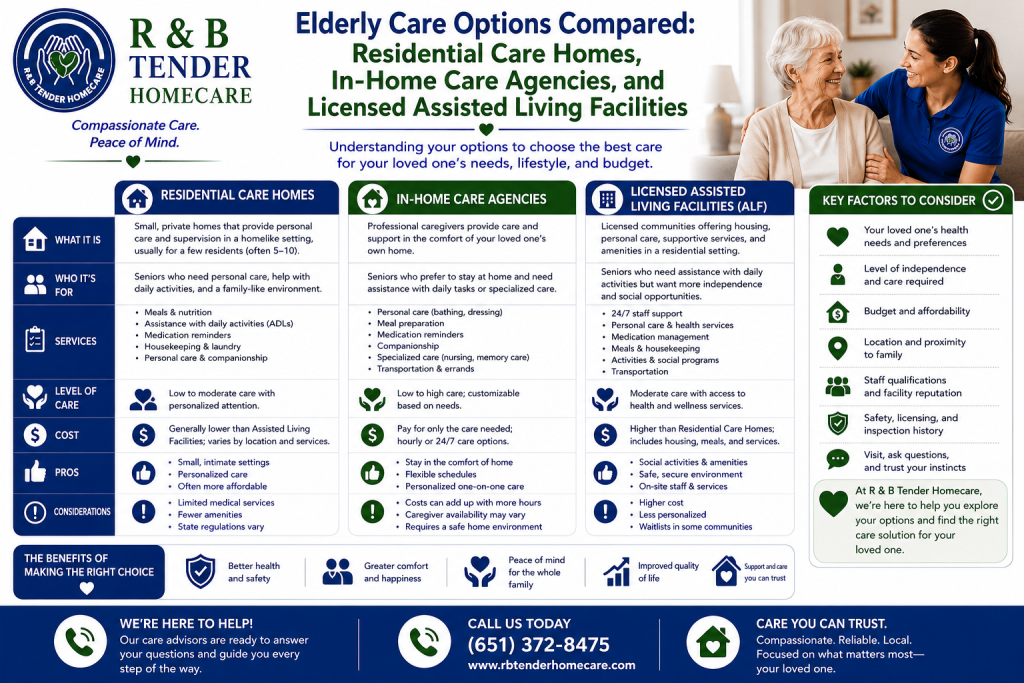
Residential Care Homes vs. In-Home Care Agencies vs. Assisted Living
| Factor | Residential Care Homes | In-Home Care Agencies | Licensed Assisted Living |
|---|---|---|---|
| Living Environment | Small, home-like setting | Senior remains at home | Residential community |
| Personalization | Often highly personalized | Highly customizable schedule | Individualized care plans |
| Social Interaction | Small-group environment | Mainly caregiver and family interaction | Broader group activities |
| Independence | Moderate | Often highest | Moderate to high |
| Cost Structure | Usually monthly | Often hourly or scheduled | Usually monthly plus possible care fees |
4. Health, Mobility, and Cognitive Needs
Health needs should guide the decision.
Families should consider:
- Fall history
- Walking and transfer ability
- Personal hygiene needs
- Medication routines
- Memory loss or confusion
- Chronic health conditions
- Need for supervision
A senior with limited support needs may do well with scheduled home care.
Someone who needs consistent supervision or daily help may benefit from residential care or assisted living.
If the senior needs complex medical treatment, families should also discuss skilled nursing or home health options with healthcare professionals.
5. Independence and Lifestyle
Lifestyle preferences matter just as much as physical care needs.
In-home care may be best for seniors who value:
- Familiar surroundings
- Privacy
- Flexible routines
- Living near neighbors and family
Residential care homes may suit seniors who prefer:
- Smaller groups
- Quiet surroundings
- Consistent routines
- Closer caregiver relationships
Assisted living may appeal to seniors who enjoy:
- Organized activities
- Group dining
- Community events
- Meeting other older adults
6. Cost and Financial Considerations
Senior care costs can vary significantly by state, city, level of care, room type, schedule, and services.
Families should ask for a complete written cost breakdown.
Compare:
- Base monthly or hourly rates
- Personal care charges
- Medication-related services
- Transportation
- Meals
- Housekeeping
- Weekend or holiday rates
- Additional supervision
Home care may be cost-effective when only limited weekly assistance is needed, while extensive in-home care may become more expensive.
Financial support may be available through long-term care insurance, veterans’ programs, Medicaid-related programs, or other benefits depending on eligibility.
7. How to Choose the Right Elderly Care Option
Before choosing a provider, ask:
- Can my loved one safely remain at home?
- How much daily assistance is needed?
- Is supervision required overnight?
- Would more social interaction improve quality of life?
- How much family support is available?
- What option fits the long-term budget?
- Can the provider adapt if needs increase?
Also verify:
- Licensing
- Caregiver screening
- Emergency procedures
- Medication policies
- Communication with families
- Total pricing
Whenever possible, include the senior in the decision.
Elderly Care Options in Minnesota
Families comparing elderly care options in Minnesota should evaluate home care, residential assisted living, and other local senior support services based on individual needs.
R & B Tender Homecare provides information about home care, residential assisted living, staffing, and supportive senior care services in Minnesota.
Speaking directly with a care provider can help families determine which option offers the right balance of independence, safety, support, and quality of life.
❓ Frequently Asked Questions
What are the main elderly care options?
Common choices include in-home care, residential care homes, assisted living, memory care, and skilled nursing. The appropriate option depends on the senior’s health and support needs.
What is the difference between in-home care and residential care?
In-home care allows seniors to remain in their own residence, while residential care provides support in a smaller senior living home.
Is assisted living better than home care?
Not necessarily. Home care may be better for seniors who want to remain at home, while assisted living may suit those who need regular support and more social opportunities.
Who is a residential care home best for?
Residential care homes may work well for seniors who need daily assistance and prefer a smaller, more home-like environment.
How do families choose the right senior care option?
Compare safety, mobility, cognitive needs, personal preferences, services, licensing, family support, social needs, and total cost before making a decision.