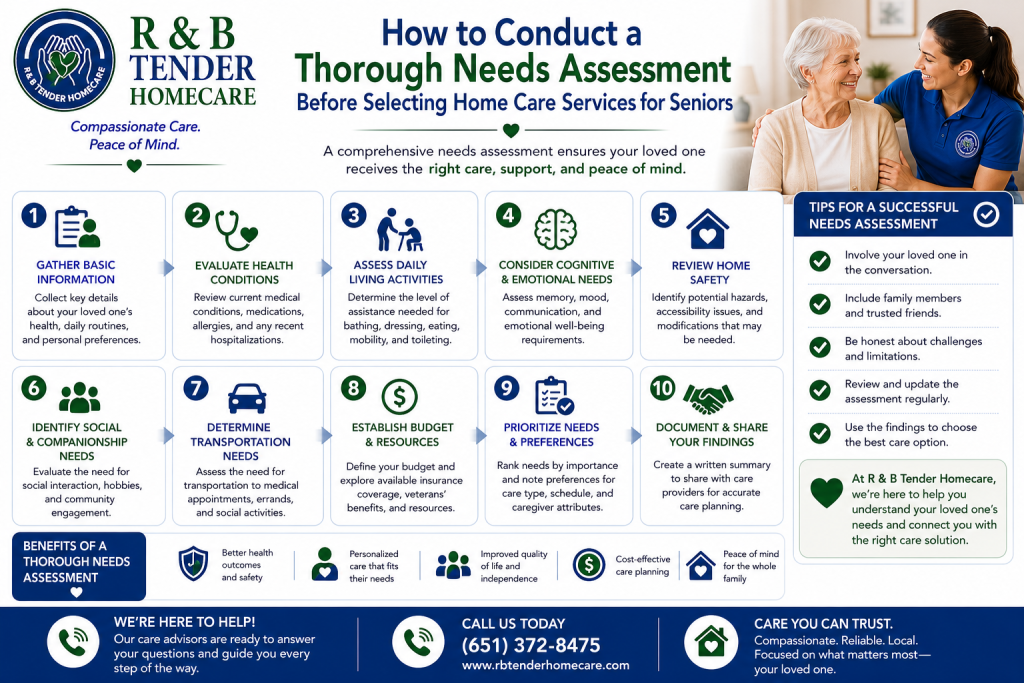
📋 Key Takeaways
- A thorough needs assessment helps families choose the right home care services for seniors based on real needs instead of assumptions.
- Physical health, mobility, cognitive changes, emotional well-being, daily living tasks, and home safety should all be reviewed.
- Families should also evaluate budget, insurance, caregiver availability, and the senior’s personal preferences.
- A written checklist makes it easier to compare in-home care agencies and ask consistent questions during interviews.
- The assessment should be reviewed regularly because senior care needs can change after falls, hospitalizations, new diagnoses, or mobility decline.
📑 Table of Contents
- Introduction: Why a Needs Assessment Matters
- Step 1 – Evaluate Physical Health and Mobility
- Step 2 – Assess Cognitive and Emotional Needs
- Step 3 – Review Activities of Daily Living
- Step 4 – Evaluate Home Safety
- Step 5 – Review Social and Companionship Needs
- Step 6 – Build a Realistic Care Schedule
- Step 7 – Review Costs and Funding
- Using the Assessment to Compare Home Care Agencies
- Quick Senior Care Needs Checklist
- ❓ Frequently Asked Questions
Introduction: Why a Needs Assessment Matters
Choosing home care services for seniors is an important decision because every older adult has different health, mobility, emotional, and lifestyle needs.
One senior may only need help with meals and housekeeping, while another may require daily assistance with bathing, dressing, mobility, or supervision.
A detailed needs assessment helps families understand what type of support is actually required before contacting providers.
It also helps avoid paying for unnecessary services or selecting an agency that cannot meet the senior’s long-term needs.
Step 1 – Evaluate Physical Health and Mobility
Start with the senior’s physical condition.
Review:
- Walking ability
- Balance and fall history
- Use of a cane, walker, or wheelchair
- Ability to get in and out of bed
- Ability to use stairs
- Strength and endurance
- Recent hospitalizations or injuries
Also document chronic conditions such as diabetes, arthritis, heart disease, or respiratory problems.
If the senior has complex medical needs, families should discuss whether non-medical home care is sufficient or whether skilled home health services are also needed.
Medication Needs
Create a current medication list that includes:
- Medication name
- Dosage
- Schedule
- Special instructions
Then determine whether the senior can manage medications independently or only needs reminders.
Families should clearly distinguish between medication reminders and medical administration services.
Step 2 – Assess Cognitive and Emotional Needs
Memory and emotional well-being are important parts of any senior care assessment.
Ask:
- Does the senior forget appointments?
- Are medications frequently missed?
- Is there confusion about time or place?
- Has the senior wandered or become lost?
- Has personality or behavior changed?
- Is the senior experiencing loneliness or social isolation?
If dementia or Alzheimer’s disease is present, ask prospective agencies about caregiver training and experience with cognitive support.
Emotional needs also matter.
A senior who lives alone may benefit greatly from regular companionship even when extensive personal care is not needed.
Step 3 – Review Activities of Daily Living
Activities of Daily Living, or ADLs, are basic tasks required for everyday independence.
Evaluate whether the senior needs help with:
- Bathing
- Dressing
- Grooming
- Toileting
- Eating
- Walking
- Getting in and out of a bed or chair
Also review Instrumental Activities of Daily Living, which may include:
- Meal preparation
- Shopping
- Laundry
- Housekeeping
- Transportation
- Appointment management
The more assistance required, the more important it becomes to choose an agency with reliable scheduling and trained caregivers.
Step 4 – Evaluate Home Safety
A senior may need home care partly because the current environment creates safety risks.
Walk through the home and inspect:
- Loose rugs
- Cluttered walkways
- Poor lighting
- Bathroom safety
- Stairways
- Furniture placement
- Wheelchair or walker accessibility
Possible improvements may include:
- Grab bars
- Non-slip flooring
- Night-lights
- Handrails
- Raised toilet seats
- Emergency alert systems
Home modifications can sometimes reduce the amount of hands-on assistance needed while allowing the senior to remain more independent.
Step 5 – Review Social and Companionship Needs
Senior care is not only about physical assistance.
Ask how often the senior:
- Talks with friends or family
- Leaves the house
- Participates in hobbies
- Attends religious or community activities
- Feels lonely or isolated
Companion care may include conversation, walks, games, meal preparation, errands, and transportation.
When comparing in-home care agencies, ask whether caregivers can be matched based on personality, interests, language, or cultural preferences.
Step 6 – Build a Realistic Care Schedule
Once needs are identified, determine how often assistance is required.
For example:
| Need | Frequency | Possible Support |
|---|---|---|
| Bathing & Dressing | Daily | Home Caregiver |
| Meal Preparation | Daily | Caregiver / Family |
| Housekeeping | 1–2 Times Weekly | Caregiver |
| Transportation | As Needed | Caregiver / Family |
| Companionship | Several Times Weekly | Caregiver |
This makes it easier to request accurate pricing from providers.
Step 7 – Review Costs and Funding
The cost of home care services for seniors varies by location, schedule, care level, and provider.
Ask agencies about:
- Hourly rates
- Minimum visit requirements
- Weekend rates
- Holiday rates
- Transportation charges
- Overnight care
- Cancellation fees
Families may use private funds, long-term care insurance, veterans’ benefits, or qualifying public programs depending on eligibility and the type of services needed.
Always confirm coverage directly with the appropriate program, insurer, or provider.
Using the Assessment to Compare Home Care Agencies
Bring your completed assessment when speaking with potential providers.
Ask each agency:
- Can you provide all the services listed in our assessment?
- How are caregivers screened?
- What training do caregivers receive?
- How do you match caregivers with clients?
- What happens if the caregiver is unavailable?
- Who do we contact after business hours?
- How are changes in care needs handled?
- Can we increase or reduce service hours?
- How are families updated?
Using the same questions with every provider makes comparisons much easier.
Quick Senior Care Needs Assessment Checklist
- ☐ Mobility and fall risk reviewed
- ☐ Medication routine documented
- ☐ Cognitive health evaluated
- ☐ Personal care needs identified
- ☐ Meal and nutrition needs reviewed
- ☐ Home safety risks documented
- ☐ Companionship needs considered
- ☐ Transportation needs identified
- ☐ Weekly care schedule created
- ☐ Monthly budget established
Families exploring home care services for seniors in Minnesota can learn more about home care and other supportive senior care options through R & B Tender Homecare.
❓ Frequently Asked Questions
What is a senior care needs assessment?
A needs assessment evaluates a senior’s health, mobility, personal care, cognitive condition, safety, social needs, and daily routine to determine the appropriate level of support.
When should a family complete a home care assessment?
Complete an assessment before hiring a provider and review it again after major health changes, falls, hospitalizations, new diagnoses, or increased difficulty with daily activities.
What are the most important home care needs to evaluate?
Mobility, bathing, dressing, meals, medications, cognitive health, home safety, transportation, companionship, and family support are key areas to review.
How does a needs assessment help choose an in-home care agency?
It gives families a clear list of required services, making it easier to compare agencies based on caregiver skills, availability, pricing, and ability to meet the senior’s needs.
Should the senior participate in the assessment?
Yes, whenever possible. Including the senior helps ensure that personal preferences, routines, comfort, and independence remain central to the care plan.