Key Takeaways
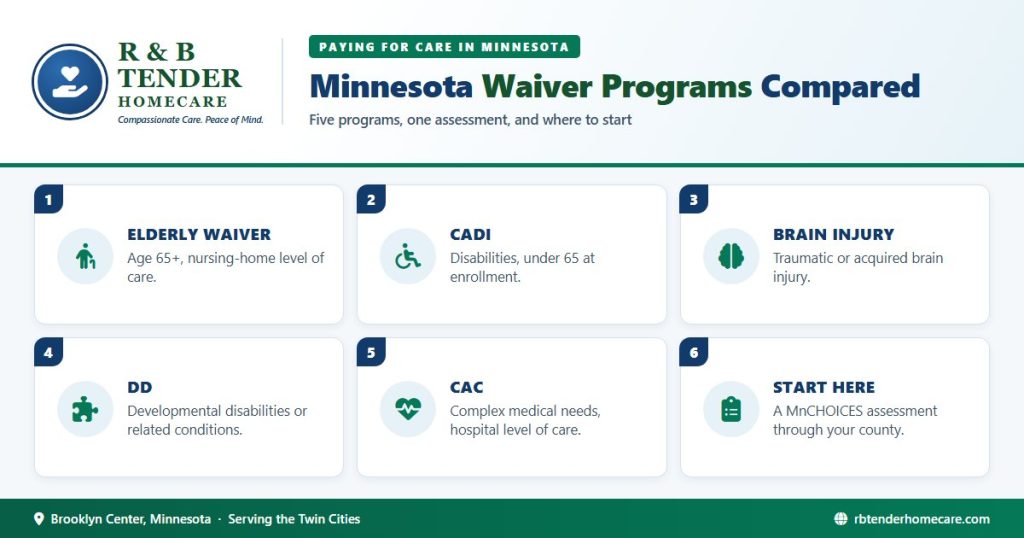
- Minnesota has five main home and community-based waiver programs, each for a different group of people.
- All of them pay for services that help a person live in the community instead of an institution.
- All of them require Medical Assistance eligibility and an assessment of need.
- A person is enrolled in one waiver at a time, based on their age and the nature of their disability or condition.
- The way in is the same for every program: ask your county or tribal agency for a MnCHOICES assessment.
Table of Contents
Minnesota pays for a great deal of care at home and in the community through programs known as waivers. Families hear the acronyms, EW, CADI, BI, DD, CAC, from case managers and providers, often without a clear explanation of which one applies to them or why.
This guide compares the Minnesota waiver programs side by side: who each one is for, what it pays for, and how to apply. Eligibility rules and service lists are updated by the Department of Human Services, so confirm current details with your assessor.
What a Waiver Is
Medicaid, called Medical Assistance in Minnesota, traditionally paid for long-term care in institutions such as nursing homes. A waiver sets that rule aside and lets the funding pay for services in the person’s own home or community instead. That is why they are called home and community-based services waivers.
Each waiver is aimed at a particular group, defined by age and by the kind of disability or condition the person has.
The Five Programs at a Glance
| Waiver | Who it is for | Level of care |
|---|---|---|
| Elderly Waiver (EW) | People aged 65 and older | Nursing facility |
| CADI | People with disabilities, under 65 at enrollment | Nursing facility |
| Brain Injury (BI) | People with a traumatic or acquired brain injury | Nursing facility or specialized hospital |
| Developmental Disabilities (DD) | People with a developmental disability or related condition | Intermediate care facility for people with developmental disabilities |
| Community Alternative Care (CAC) | People with complex, chronic medical needs | Hospital |
Elderly Waiver (EW)
For people aged 65 and older who need a nursing-facility level of care and choose to live at home or in a community setting such as assisted living. Services can include customized living in assisted living, personal care, homemaker and chore services, home-delivered meals, adult day services, respite and case management.
Community Access for Disability Inclusion (CADI)
For children and adults with disabilities who need a nursing-facility level of care. It is the broadest of the disability waivers and covers people with physical disabilities, chronic illness and mental health conditions. Services include personal support, homemaker and respite, adult day services, supported employment, housing-related supports and more.
Brain Injury (BI) Waiver
For people with a traumatic, acquired or degenerative brain injury who need a nursing-facility or specialized hospital level of care. In addition to the common services, it includes supports specific to brain injury, such as behavioral and cognitive support.
Developmental Disabilities (DD) Waiver
For people with a developmental disability or a related condition who would otherwise need care in an intermediate care facility. It covers a wide range of residential, day, employment and in-home supports, with a strong focus on skill-building and community participation.
Community Alternative Care (CAC)
For people who are chronically ill or medically fragile and would otherwise need a hospital level of care. It supports children and adults with complex medical needs to live at home, with services that can include skilled nursing, personal care, respite and specialized equipment.
What They Have in Common
- All require Medical Assistance eligibility, with the financial rules applied to the person.
- All require an assessment, in Minnesota the MnCHOICES assessment, that shows the person meets the level of care.
- All produce a support plan that lists the services, amounts and providers.
- All include case management.
- All pay for services, not rent. Housing costs are handled separately.
- Many of the services are delivered by providers licensed under 245D.
How to Apply
- Contact your county or tribal human services agency and ask for a MnCHOICES assessment. If you are not sure who to call, Disability Hub MN or the Senior LinkAge Line can direct you.
- Complete the assessment, which looks at health, daily needs, safety and goals.
- Apply for Medical Assistance if not already enrolled.
- If eligible, work with a case manager to build a support plan and choose providers.
You do not need to know which waiver you want. The assessment determines that.
Frequently Asked Questions
How many waiver programs does Minnesota have?
Five main home and community-based waivers: Elderly Waiver, CADI, Brain Injury, Developmental Disabilities and Community Alternative Care.
Can someone be on two waivers at once?
No. A person is enrolled in one waiver, chosen according to their age and the nature of their condition.
Do waivers pay for rent?
No. Waivers pay for services. Housing costs are the person’s responsibility, with separate help available for some people.
What is the difference between CADI and the Elderly Waiver?
Both use a nursing-facility level of care, but CADI is for people with disabilities who are under 65 at enrollment, while the Elderly Waiver is for people 65 and older.
How do I find out which waiver I qualify for?
Ask your county or tribal agency for a MnCHOICES assessment. The assessment determines which program, if any, fits.
Talk to R & B 245D Support
R & B 245D provides licensed 245D basic support services under the Minnesota Department of Human Services. If you are working out which services fit, we can walk through it with you and your case manager.
This article is general information for families and professionals in Minnesota. It is not medical, legal or financial advice. Programs, rules and eligibility change, so confirm the details with your county or tribal agency, the Minnesota Department of Health or the Minnesota Department of Human Services before you make a decision.