Key Takeaways
- Falls are the leading cause of injury among older adults, and most happen at home during ordinary activities.
- The bathroom and the route between bed and toilet at night are where the greatest risk lies.
- Many of the most effective fixes are inexpensive: grab bars, lighting, removing rugs and better footwear.
- Home changes are only half the answer. Medication, vision, strength and balance matter just as much.
- A fall, or a new fear of falling, is a reason to see a doctor, even if there was no injury.
Table of Contents
A fall is often the event that changes everything for an older adult. A broken hip can mean a hospital stay, a long recovery and, sometimes, the end of living independently. The Centers for Disease Control and Prevention identifies falls as the leading cause of injury among adults aged 65 and older.
The encouraging part is that falls are not simply a consequence of age. Many are preventable. This fall prevention checklist for seniors goes through the home room by room and then covers the health factors that are easy to miss.
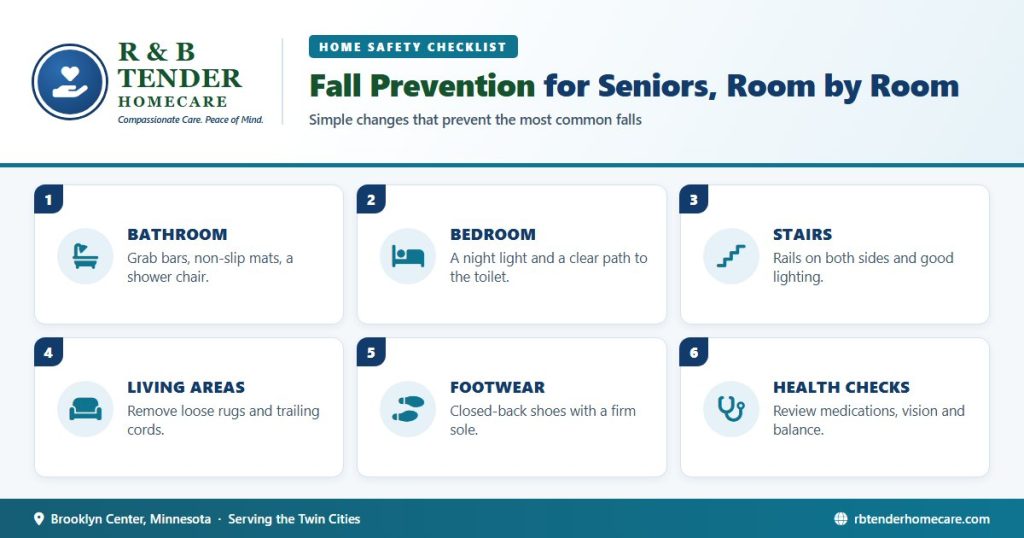
Bathroom
Wet, hard surfaces and a lot of standing up and sitting down make this the highest-risk room in the house.
- Install grab bars beside the toilet and in the shower or tub. Towel rails are not built to take a person’s weight.
- Use a non-slip mat inside the shower and a non-slip bath mat outside it.
- Add a shower chair and a hand-held shower head.
- Consider a raised toilet seat.
- Keep toiletries within reach, so there is no bending or stretching on a wet floor.
Bedroom
- Fit a night light along the route from the bed to the bathroom.
- Keep a lamp and a phone within reach of the bed.
- Check the bed height. Feet should rest flat on the floor when sitting on the edge.
- Clear the floor of shoes, cords and clutter.
- Encourage sitting on the edge of the bed for a moment before standing, especially first thing in the morning.
Stairs and Hallways
- Fit handrails on both sides of the stairs, running the full length.
- Make sure there are light switches at the top and the bottom.
- Mark the edge of each step with contrasting tape if the steps are hard to see.
- Never store anything on the stairs.
- Repair loose carpet and uneven boards.
Living Areas and Kitchen
- Remove loose rugs, or secure them with non-slip backing.
- Run cords along the wall, not across the floor.
- Arrange furniture to leave wide, clear walkways.
- Choose chairs with arms that are firm enough to push up from.
- In the kitchen, move everyday items to shelves between waist and shoulder height. If something has to be reached, use a sturdy step stool with a handle, never a chair.
- Wipe up spills at once.
Outside the Home
Minnesota winters add their own hazards.
- Keep steps and paths clear of snow and ice, and salt them.
- Fit a handrail at the entrance.
- Make sure the entrance is well lit, ideally with a motion sensor.
- Wear boots with a good grip, and consider ice cleats.
- If conditions are poor, arrange for deliveries rather than going out.
The Health Factors That Matter as Much as the House
A safe house does not help much if the person is dizzy or unsteady. Raise these with a doctor or pharmacist.
- Medications. Some medicines, and some combinations, cause dizziness or drowsiness. Ask for a medication review.
- Vision. Have eyes tested regularly and keep glasses up to date.
- Strength and balance. Balance and strength exercises reduce the risk of falling. A physical therapist can recommend a safe program.
- Feet and footwear. Closed-back shoes with a firm, non-slip sole are far safer than loose slippers or socks on a hard floor.
- Blood pressure. Feeling light-headed on standing should be reported.
- Hydration and nutrition. Dehydration and skipped meals both cause weakness.
What to Do After a Fall
- Stay calm and check for pain before moving.
- If there is severe pain, a possible head injury or the person cannot get up, call 911.
- If they are unhurt, roll onto the side, get onto hands and knees, and use a sturdy chair to rise slowly.
- Tell the doctor, even if there was no injury. A fall is information.
A personal alarm worn on the wrist or around the neck is worth considering for anyone who lives alone.
When Home Changes Are Not Enough
If falls continue despite these changes, or if someone needs help getting to the bathroom at night, it may be time for more support. In an assisted living home, staff are on hand around the clock, the environment is already adapted, and help with moving about is part of the daily routine. For many families, repeated falls are the point at which that becomes the safer option.
Frequently Asked Questions
What is the most common cause of falls in older adults?
Usually a combination: weaker muscles and balance, medication side effects, poor vision, and hazards in the home such as loose rugs and poor lighting.
Which room is most dangerous for falls?
The bathroom, because of wet surfaces and the amount of sitting and standing. The route between the bed and bathroom at night is also high risk.
Do grab bars really help?
Yes. Properly installed grab bars beside the toilet and in the shower give a secure hold where it is most needed. Towel rails should not be used for support.
Should a fall be reported to a doctor if nobody was hurt?
Yes. A fall can point to a problem with medication, blood pressure, vision or balance that can be treated.
Can exercise reduce the risk of falling?
Yes. Strength and balance exercises lower the risk. Ask a doctor or physical therapist which exercises are safe.
Talk to R & B Residential Assisted Living
R & B Residential Assisted Living is a family-owned, licensed home in the Twin Cities area. If you would like to see how a small residential setting works day to day, we are glad to show you around.
This article is general information for families and professionals in Minnesota. It is not medical, legal or financial advice. Programs, rules and eligibility change, so confirm the details with your county or tribal agency, the Minnesota Department of Health or the Minnesota Department of Human Services before you make a decision.