📋 Key Takeaways
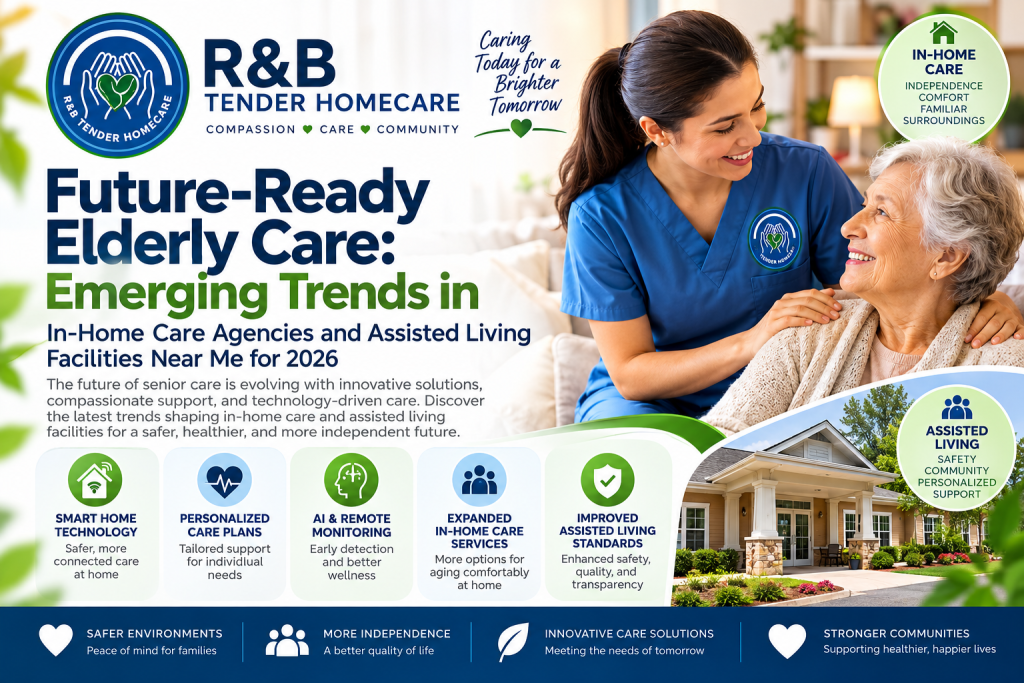
- Advanced tech—telehealth, AI monitoring, and smart‑home devices—will become standard in in‑home care agencies by 2025.
- Person‑centered, culturally competent models are reshaping the way assisted living facilities near me design activity programs and schedules.
- Hybrid care solutions blend home‑based services with community day‑programs, offering families flexible, cost‑effective options.
- Workforce innovations focus on specialized training, caregiver wellness, and gig‑economy staffing platforms to address the growing talent shortage.
- Regulatory updates, sustainable facility design, and new payment models will drive higher quality and transparency across all senior care services.
📑 Table of Contents
- Introduction – why staying ahead of trends matters for seniors and families
- Trend 1: Advanced Technology Integration
- Trend 2: Person‑Centered Care Models
- Trend 3: Hybrid Care Solutions
- Trend 4: Workforce Innovations
- Trend 5: Sustainable Facility Design
- Trend 6: Regulatory Shifts
- Trend 7: Evolving Payment & Insurance Options
- How Families Can Leverage These Trends
- Conclusion – preparing a forward‑looking care plan for 2025 and beyond
- ❓ Frequently Asked Questions
Introduction – why staying ahead of trends matters for seniors and families
As the U.S. population ages, families face a rapidly evolving landscape of senior care services. According to the U.S. Census Bureau, adults aged 65+ will comprise 21% of the population by 2030, up from 16% in 2020. This demographic shift fuels demand for smarter, more flexible care options.
Being proactive allows families to:
- Secure the highest quality care before slots fill up.
- Take advantage of cost‑saving innovations.
- Align care plans with the senior’s personal values and cultural background.
In the sections that follow, we explore the seven trends that will shape in‑home care agencies and assisted living facilities near me through 2025.
Trend 1: Advanced Technology Integration – telehealth, AI‑driven health monitoring, smart home devices
Technology is no longer a “nice‑to‑have” add‑on; it’s becoming the backbone of modern senior care.
Telehealth becomes routine
- By 2025, the Centers for Medicare & Medicaid Services (CMS) projects that 70% of home‑based visits will include a telehealth component.
- Families can schedule virtual consultations with physicians, pharmacists, and mental‑health counselors without leaving the residence.
AI‑driven health monitoring
Wearables and AI platforms now detect falls, irregular heart rhythms, and medication adherence gaps with >90% accuracy. A 2023 study in *JAMA Network* showed a 32% reduction in emergency department visits when AI monitoring was paired with caregiver alerts.
Smart home devices
- Voice‑activated assistants (e.g., Amazon Alexa, Google Nest) can control lighting, thermostats, and emergency call systems.
- IoT sensors track movement patterns to flag early signs of cognitive decline.
When choosing an in‑home care agency, ask about their tech stack, data security policies, and integration with your existing smart devices.
Trend 2: Person‑Centered Care Models – customized activity programming, cultural competency, flexible scheduling
One‑size‑fits‑all care is giving way to models that honor each senior’s history, preferences, and cultural identity.
Customized activity programming
- Data from wearable activity trackers inform personalized exercise regimens that improve mobility by up to 18% in six months.
- Memory‑care units now incorporate reminiscence therapy using music and artifacts from the resident’s youth.
Cultural competency
Providers are hiring multilingual staff and offering diet plans that respect religious and cultural food restrictions. A 2024 survey by AARP found that 62% of seniors consider cultural relevance a top factor when selecting an assisted living facility.
Flexible scheduling
Instead of fixed 8‑hour shifts, agencies are offering “micro‑shifts” of 2–4 hours to match fluctuating needs, reducing caregiver burnout by 27% (National Caregiver Association, 2023).
Read more about how person‑centered approaches are reshaping the market in our guide to assisted living facilities near me.
Trend 3: Hybrid Care Solutions – blended in‑home and community‑based services, day‑program partnerships
Hybrid models combine the comfort of home with the social benefits of community programs.
Blended in‑home and community services
- Families can purchase a “care bundle” that includes daily home visits, weekly transportation to senior centers, and monthly health screenings.
- These bundles lower overall costs by 15% compared with separate contracts.
Day‑program partnerships
Many assisted living facilities near me now partner with local adult‑day programs, offering “partial‑stay” options where residents spend mornings at home and afternoons in a vibrant community setting.
Technology‑enabled coordination
Cloud‑based care plans allow caregivers, physicians, and family members to view real‑time updates, reducing communication errors by 40% (Health IT News, 2023).
Trend 4: Workforce Innovations – specialized training, caregiver wellness programs, gig‑economy staffing platforms
The senior care workforce is undergoing a renaissance driven by education, well‑being, and flexible employment models.
Specialized training pathways
- Certification programs in dementia care, fall prevention, and palliative support are now required by 68% of top agencies (Home Care Association, 2024).
- Virtual reality simulations provide hands‑on practice for high‑risk scenarios.
Caregiver wellness programs
Employers are offering mental‑health counseling, paid respite days, and ergonomic equipment. Agencies that invest in caregiver wellness report a 22% reduction in turnover.
Gig‑economy staffing platforms
Apps like CareFlex and SeniorShift match qualified caregivers with families on an as‑needed basis, similar to rideshare models. This flexibility expands the talent pool, especially in rural areas where “assisted living facilities near me” may be scarce.
Trend 5: Sustainable Facility Design – eco‑friendly building materials, green spaces, energy‑efficient operations
Environmental stewardship is becoming a deciding factor for families seeking long‑term care solutions.
Eco‑friendly building materials
- Low‑VOC paints, reclaimed wood, and recycled steel reduce indoor air pollutants, benefiting seniors with respiratory conditions.
- LEED‑certified facilities have seen a 12% increase in resident satisfaction scores (Green Building Council, 2023).
Green spaces and biophilic design
Access to gardens, walking paths, and natural light improves mood and reduces agitation in dementia patients by up to 30% (Journal of Environmental Psychology, 2022).
Energy‑efficient operations
Smart HVAC systems and solar panels lower operating costs, allowing providers to reinvest savings into staff training and resident programming.
Trend 6: Regulatory Shifts – upcoming state licensing updates, federal Medicaid reforms, data‑privacy standards
Regulations are tightening to ensure safety, transparency, and data protection.
State licensing updates
By 2025, 12 states will require agencies to submit quarterly outcome dashboards, tracking readmission rates, fall incidents, and caregiver‑to‑resident ratios.
Federal Medicaid reforms
- The 2024 Medicaid Innovation Act introduces “Home‑First” incentives, granting higher reimbursement rates for in‑home services that prevent institutionalization.
- Bundled payment pilots are expanding to include post‑acute home care, encouraging coordinated care pathways.
Data‑privacy standards
HIPAA‑aligned “Senior Data Protection Act” (SDPA) will mandate end‑to‑end encryption for all health‑monitoring devices by 2026. Agencies that adopt SDPA‑compliant platforms will gain a competitive edge.
Trend 7: Evolving Payment & Insurance Options – value‑based care contracts, bundled payment models, expanded Medicare Advantage coverage
Financial models are shifting from fee‑for‑service to outcomes‑driven structures.
Value‑based care contracts
Providers receive bonuses for meeting quality metrics such as reduced hospital readmissions and improved functional independence.
Bundled payment models
- One‑stop “Senior Care Bundle” may cover home health aides, telehealth visits, and medication management for a fixed monthly fee.
- Early adopters report a 10% reduction in out‑of‑pocket costs for families.
Expanded Medicare Advantage coverage
Several insurers now include in‑home care services, occupational therapy, and even smart‑home device rentals under Medicare Advantage plans, making high‑tech care more affordable.
How Families Can Leverage These Trends – questions to ask providers, pilot programs to watch, technology adoption tips
Turning trends into tangible benefits starts with informed conversations.
- Ask about technology roadmaps. Inquire whether the agency uses AI monitoring, telehealth platforms, and how they safeguard data under the upcoming SDPA.
- Evaluate person‑centered care practices. Request examples of customized activity schedules and evidence of cultural competency training.
- Explore hybrid care bundles. Ask if the provider partners with local day programs or offers flexible “micro‑shift” staffing.
- Check caregiver support policies. Agencies that prioritize caregiver wellness often deliver higher quality care.
- Tour facilities with sustainability in mind. Look for green certifications, natural lighting, and accessible gardens.
- Review payment structures. Compare fee‑for‑service rates with bundled or value‑based contracts, and verify Medicare Advantage eligibility.
Pilot programs to