📋 Key Takeaways
- In-home care agencies provide personalized care in the comfort of the senior’s own home, with 24/7 support and assistance with daily activities.
- Residential care homes offer a community-based approach to care, with a smaller, more intimate setting and a focus on social interaction.
- Licensed assisted living facilities provide a comprehensive range of services, including medical care, therapy, and recreational activities, in a secure and supportive environment.
- Ultimately, the best elderly care option will depend on the individual senior’s unique needs and preferences, as well as their budget and insurance coverage.
📑 Table of Contents
Introduction to Elderly Care Options
As the population ages, the demand for elderly care options is increasing. With over 70 million Americans aged 65 and older, the need for quality care and support is becoming more pressing. In this article, we will explore the different elderly care options available, including in-home care agencies, residential care homes, and licensed assisted living facilities. For more information on navigating these options, check out our Elderly Care Options article.
Statistics on Elderly Care
According to the American Association of Retired Persons (AARP), the majority of seniors ( 87% ) prefer to age in place, in the comfort of their own homes. However, as the need for care increases, many families are turning to in-home care agencies, residential care homes, and licensed assisted living facilities for support. For a comprehensive guide to senior care services, visit our Ultimate Guide to Senior Care Services.
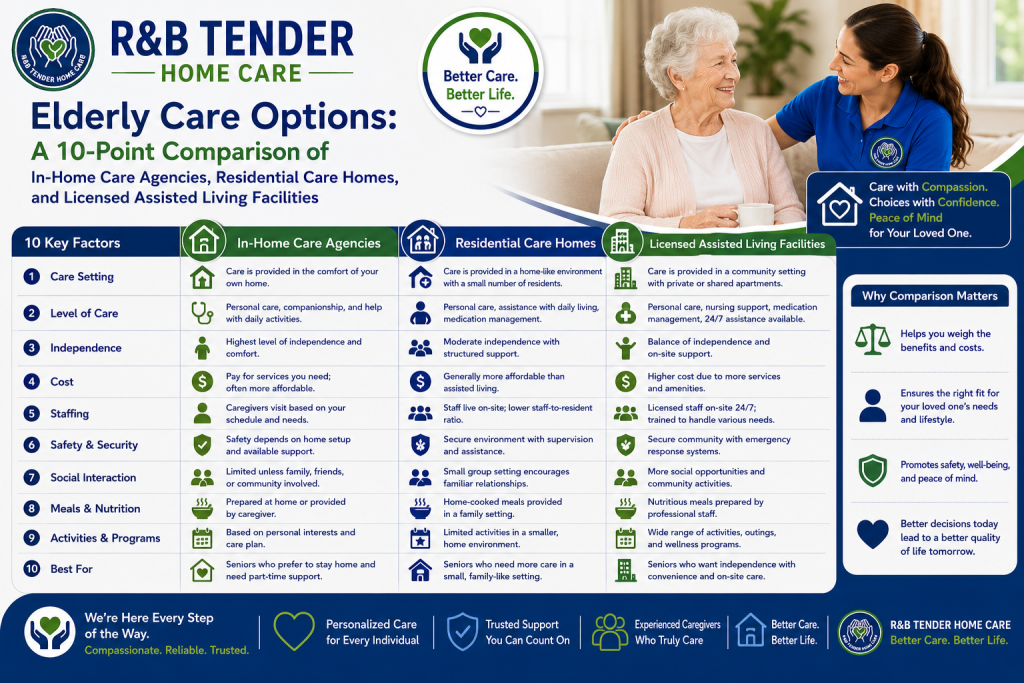
Comparison of In-Home Care Agencies, Residential Care Homes, and Licensed Assisted Living Facilities
When it comes to elderly care options, there are several factors to consider, including cost, level of care, and quality of life. Here is a brief comparison of the three main options:
- In-home care agencies: provide personalized care in the senior’s own home, with 24/7 support and assistance with daily activities.
- Residential care homes: offer a community-based approach to care, with a smaller, more intimate setting and a focus on social interaction.
- Licensed assisted living facilities: provide a comprehensive range of services, including medical care, therapy, and recreational activities, in a secure and supportive environment.
To find the best assisted living facilities near you, check out our Unlocking the Best Assisted Living Facilities Near Me article.
Pros and Cons of Each Option
Each elderly care option has its pros and cons, which should be carefully considered when making a decision. Here are some key points to consider:
In-Home Care Agencies
Pros:
- Personalized care in the comfort of the senior’s own home.
- Flexibility in terms of scheduling and care plans.
- Cost-effective compared to residential care homes and assisted living facilities.
Cons:
- Limited support for seniors with complex medical needs.
- Isolation can be a concern if the senior is not able to leave the home.
For a comprehensive comparison of in-home care agencies and residential care homes, visit our Home Care Services for Seniors article.
Residential Care Homes
Pros:
- Community-based approach to care, with a focus on social interaction.
- Supportive environment with trained caregivers and staff.
- Affordable compared to licensed assisted living facilities.
Cons:
- Limited space and amenities compared to assisted living facilities.
- Less flexibility in terms of care plans and scheduling.
Licensed Assisted Living Facilities
Pros:
- Comprehensive range of services, including medical care, therapy, and recreational activities.
- Secure and supportive environment with trained staff and caregivers.
- Amenities such as dining, transportation, and social activities.
Cons:
- Higher cost compared to in-home care agencies and residential care homes.
- Less personalized care due to the larger size of the facility.
To learn more about choosing the best assisted living facilities near you, check out our Finding the Perfect Fit article.
Conclusion
In conclusion, elderly care options vary widely in terms of cost, level of care, and quality of life. When making a decision, it is essential to consider the individual senior’s unique needs and preferences, as well as their budget and insurance coverage. By weighing the pros and cons of each option and considering the statistics on elderly care, families can make an informed decision and choose the best elderly care option for their loved one. For more information on elderly care options, visit our website at RBTender Home Care.
❓ Frequently Asked Questions
Q: What is the difference between in-home care agencies and residential care homes?
In-home care agencies provide personalized care in the senior’s own home, while residential care homes offer a community-based approach to care in a smaller, more intimate setting.
Q: What is the best elderly care option for my loved one?
The best elderly care option will depend on the individual senior’s unique needs and preferences, as well as their budget and insurance coverage. It is essential to weigh the pros and cons of each option and consider the statistics on elderly care when making a decision.
Q: How can I find the best assisted living facilities near me?
To find the best assisted living facilities near you, research online, read reviews, and visit facilities in person. You can also check out our Unlocking the Best Assisted Living Facilities Near Me article for more information.
Q: What is the difference between licensed assisted living facilities and residential care homes?
Licensed assisted living facilities provide a comprehensive range of services, including medical care, therapy, and recreational activities, in a secure and supportive environment. Residential care homes, on the other hand, offer a community-based approach to care in a smaller, more intimate setting.
Q: How can I pay for elderly care?
There are several ways to pay for elderly care, including private pay, Medicaid, and veterans’ benefits. It is essential to research and understand the different payment options available and to consider the senior’s budget and insurance coverage when making a decision.