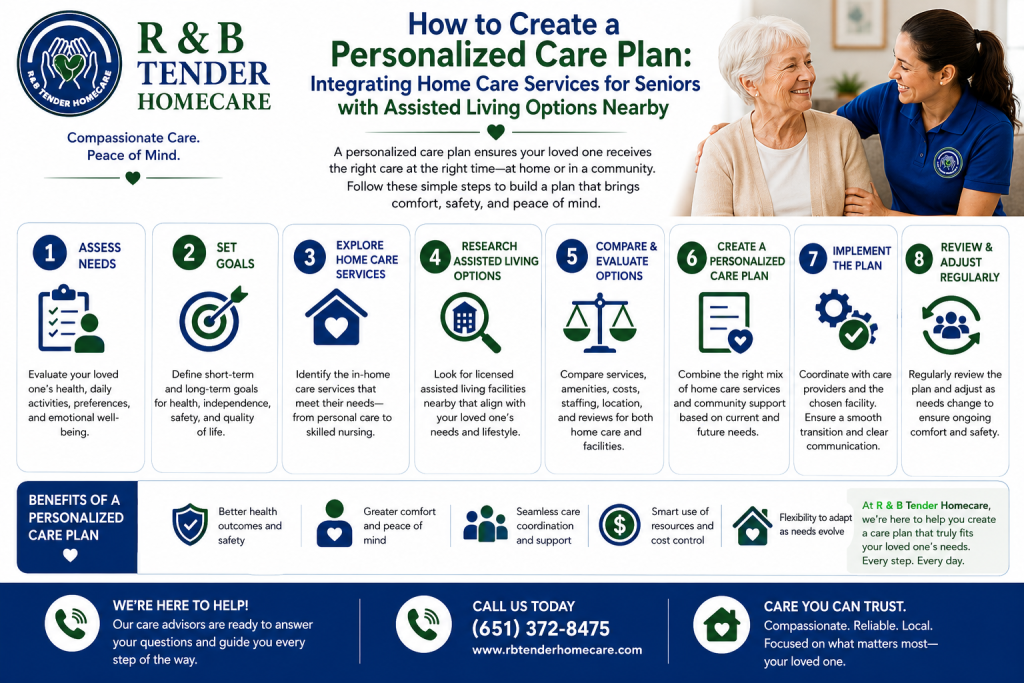
📋 Key Takeaways
- A personalized care plan should reflect the senior’s health, mobility, routines, preferences, safety needs, and family support.
- Home care services for seniors can help older adults remain independent while receiving support with daily activities.
- Families can also explore assisted living options nearby when greater supervision, social engagement, or residential support is needed.
- Care plans should include clear goals, responsibilities, schedules, costs, and a process for regular review.
- The best plan is flexible enough to change as the senior’s health, mobility, or level of independence changes.
📑 Table of Contents
- Introduction: Why Personalized Senior Care Matters
- Step 1 – Assess Health and Daily Living Needs
- Step 2 – Understand the Senior’s Preferences
- Step 3 – Compare Home Care Services for Seniors
- Step 4 – Evaluate Assisted Living Options Nearby
- Step 5 – Build a Flexible Care Plan
- Step 6 – Set Goals and Monitor Progress
- Cost and Financial Planning
- Safety, Licensing, and Communication
- Senior Care Options in Minnesota
- ❓ Frequently Asked Questions
Introduction: Why Personalized Senior Care Matters
Every older adult has different health needs, routines, preferences, and family circumstances. For that reason, senior care should never be based on a one-size-fits-all approach.
A well-designed personalized care plan creates a clear roadmap for supporting safety, independence, comfort, and quality of life.
For some families, the plan may rely primarily on home care services for seniors. Others may need to compare assisted living facilities near me as care needs increase.
In many cases, families benefit from planning for both options so they are prepared if circumstances change.
Step 1 – Assess Health and Daily Living Needs
The first step is understanding what type of assistance the senior currently needs.
Review areas such as:
- Bathing and personal hygiene
- Dressing and grooming
- Walking and mobility
- Transfers from bed or chairs
- Meal preparation
- Medication routines
- Housekeeping
- Transportation
- Memory and cognitive health
- Social interaction
Also consider whether the senior has experienced recent falls, hospitalizations, increasing confusion, missed meals, or difficulty managing everyday tasks.
These details help families determine whether limited home care is sufficient or whether a more supportive residential environment may be appropriate.
Step 2 – Understand the Senior’s Preferences
A care plan should reflect what the senior wants whenever possible.
Ask questions such as:
- Do you want to remain at home?
- Would you enjoy living around other seniors?
- How important is privacy?
- Do you prefer a quiet routine or frequent activities?
- How involved do you want family members to be?
- Are there cultural, religious, or dietary preferences to consider?
Respecting personal preferences can improve cooperation and help the senior feel more involved in decisions about their own life.
Step 3 – Compare Home Care Services for Seniors
Home care services for seniors can provide flexible support while allowing older adults to remain in familiar surroundings.
Depending on the provider, services may include:
- Personal care assistance
- Meal preparation
- Light housekeeping
- Laundry
- Mobility support
- Medication reminders
- Companionship
- Errands
- Transportation
- Respite care for family caregivers
When comparing agencies, ask about caregiver screening, training, scheduling, emergency procedures, supervision, communication, and backup coverage.
Families should also ask how services can be increased if needs change.
Step 4 – Evaluate Assisted Living Options Nearby
Even when a senior currently lives safely at home, it can be helpful to research assisted living options nearby before an urgent need develops.
Assisted living may be appropriate when a senior:
- Needs regular daily assistance
- Requires more consistent supervision
- Is becoming socially isolated
- Has increasing mobility challenges
- Needs a safer living environment
- Would benefit from organized activities and meals
When searching for assisted living facilities near me, compare:
- Licensing
- Available care services
- Room options
- Meals
- Activities
- Medication support
- Safety procedures
- Family communication
- Total monthly costs
Whenever possible, tour facilities before making a decision.
Step 5 – Build a Flexible Care Plan
Once needs and available resources are clear, create a written plan.
A simple care plan can include:
| Care Need | Support Required | Who Provides It |
|---|---|---|
| Morning Personal Care | Bathing and dressing assistance | Home Caregiver |
| Meals | Meal preparation and monitoring | Caregiver / Family |
| Transportation | Medical appointments and errands | Family / Care Service |
| Social Engagement | Activities and companionship | Caregiver / Community Program |
| Future Residential Support | Assisted living if needs increase | Selected Assisted Living Provider |
This approach helps families see exactly who is responsible for each part of the senior’s care.
Step 6 – Set Goals and Monitor Progress
A personalized plan should include practical goals.
Examples include:
- Maintain safe mobility inside the home.
- Attend all scheduled medical appointments.
- Eat regular, balanced meals.
- Reduce loneliness through weekly social activities.
- Maintain consistent personal care routines.
- Reduce family caregiver stress.
Review the plan regularly and after any major health change.
Ask:
- Is the senior still safe at home?
- Are current care hours enough?
- Has mobility changed?
- Has memory declined?
- Does the senior need more supervision?
- Would assisted living now provide a better environment?
Cost and Financial Planning
Cost can influence which combination of services is realistic.
Families should compare:
- Hourly home care rates
- Minimum visit requirements
- Weekend and holiday charges
- Transportation costs
- Assisted living monthly rates
- Additional personal care fees
- Medication support charges
Some families may use private funds, long-term care insurance, veterans’ benefits, or qualifying public programs depending on eligibility and the type of care.
Always verify coverage directly before making financial commitments.
Safety, Licensing, and Communication
Whether care is provided at home or in a residential setting, families should verify appropriate credentials and safety procedures.
Ask providers about:
- Licensing or registration
- Caregiver background checks
- Emergency response procedures
- Medication policies
- Liability coverage
- Family communication
- Complaint procedures
Also identify who has authority to make care decisions if the senior becomes unable to do so.
Home Care and Assisted Living Options in Minnesota
Families exploring home care services for seniors in Minnesota can benefit from planning ahead and comparing both in-home and residential options.
R & B Tender Homecare provides information about home care, residential assisted living, and supportive senior care services in Minnesota.
Discussing current needs and possible future changes with a care provider can help families create a plan that remains flexible over time.
❓ Frequently Asked Questions
What should be included in a personalized senior care plan?
A care plan should include health needs, personal care, mobility, meals, medication routines, safety, social activities, family responsibilities, service schedules, costs, and future care options.
Can home care and assisted living be part of the same care strategy?
Yes. Families can use home care while the senior remains at home and also research assisted living options for future needs or transitions.
When should families consider assisted living?
Assisted living may be appropriate when a senior needs more daily supervision, greater personal care support, increased safety, regular meals, or more opportunities for social engagement.
How often should a senior care plan be reviewed?
Review it regularly and after major changes such as a fall, hospitalization, new diagnosis, mobility decline, or increased caregiver needs.
How do I find assisted living facilities near me?
Search local providers, verify applicable licensing, compare services and costs, read reviews, and schedule in-person tours before making a decision.