📋 Key Takeaways
- Today’s elderly care options go beyond traditional assisted living and now include flexible home-based, community, and technology-supported models.
- In-home care agencies remain a strong option for seniors who want to age in place with personalized support.
- Smaller residential care homes may appeal to seniors who prefer a quiet, home-like environment with fewer residents.
- Telehealth, remote monitoring, home modifications, and hybrid support models can help seniors maintain independence longer.
- Families should compare care needs, safety, lifestyle, licensing, location, and cost before choosing a senior care model.
📑 Table of Contents
- Introduction: Why Elderly Care Options Are Expanding
- 1. In-Home Care Agencies
- 2. Residential Care Homes
- 3. Licensed Assisted Living Facilities
- 4. Hybrid Home Care Models
- 5. Adult Day Programs
- 6. Telehealth-Supported Senior Care
- 7. Memory Care Programs
- 8. Senior Co-Housing
- 9. Veteran-Focused Senior Care
- 10. Faith-Based Senior Communities
- 11. Aging-in-Place Home Modifications
- 12. Community-Based Support Networks
- How to Choose the Right Option
- ❓ Frequently Asked Questions
Introduction: Why Elderly Care Options Are Expanding
Families today have more elderly care options than ever before.
Traditional choices such as nursing homes and assisted living are still important, but many seniors and families are also exploring home care, smaller residential settings, technology-supported programs, adult day services, and community-based models.
The right option depends on the senior’s health, mobility, memory, independence, social preferences, family support, and budget.
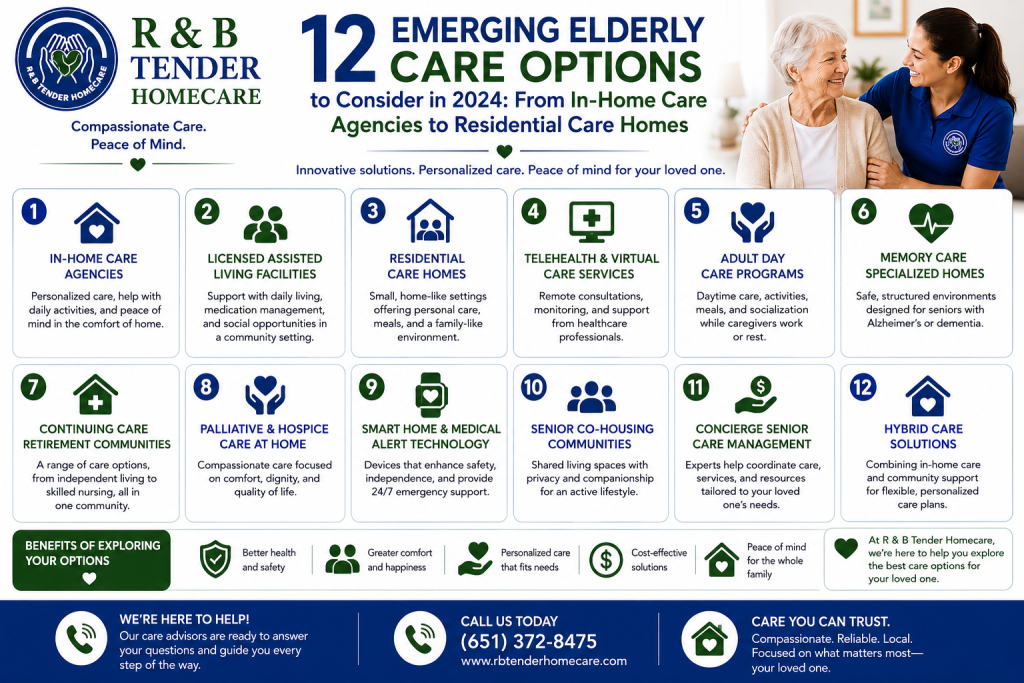
Below are 12 care models families should understand when comparing senior support options.
1. In-Home Care Agencies
In-home care agencies allow seniors to remain in their own homes while receiving help with everyday activities.
Services may include:
- Bathing and grooming
- Dressing assistance
- Meal preparation
- Light housekeeping
- Laundry
- Mobility support
- Medication reminders
- Companionship
- Transportation
This option may work well for seniors who value familiar surroundings and only need scheduled support.
2. Residential Care Homes
Residential care homes generally provide senior support in a smaller, more home-like environment.
These settings may appeal to seniors who prefer:
- Smaller groups
- Quiet surroundings
- Consistent routines
- Closer caregiver relationships
Services often include meals, personal care, supervision, housekeeping, and assistance with daily activities.
Because terminology and licensing vary by state, families should verify the provider’s specific credentials and services.
3. Licensed Assisted Living Facilities
Licensed assisted living facilities combine housing with personal care and supportive services.
They may offer:
- Private or semi-private accommodations
- Meals
- Medication support
- Housekeeping
- Transportation
- Organized activities
- Emergency support
Larger communities may also offer fitness programs, salons, libraries, gardens, and social events.
This option can suit seniors who want support while maintaining some independence.
4. Hybrid Home Care Models
Hybrid care combines traditional caregiver visits with technology.
Examples include:
- Fall-detection devices
- Remote check-in systems
- Smart medication reminders
- Video calls with family or providers
- Scheduled caregiver visits
The goal is to provide human support while using technology to improve communication and safety.
5. Adult Day Programs
Adult day programs provide daytime supervision, activities, meals, and social interaction while allowing seniors to return home in the evening.
Programs may include:
- Group activities
- Meals
- Exercise
- Social engagement
- Transportation
- Health-related support, depending on the program
This can also provide important respite for family caregivers.
6. Telehealth-Supported Senior Care
Telehealth can help seniors connect with healthcare professionals without leaving home or their residential community.
Possible services include:
- Virtual medical appointments
- Medication consultations
- Mental health support
- Follow-up visits
- Care coordination
Telehealth is not a replacement for emergency or hands-on medical care, but it can make routine care more accessible.
7. Memory Care Programs
Memory care programs are designed for people living with Alzheimer’s disease, dementia, or other cognitive conditions.
Features may include:
- Structured routines
- Secure environments
- Dementia-trained staff
- Memory-focused activities
- Family communication
- Supervision designed around cognitive needs
Families should ask specifically about licensing, staffing, safety, and dementia-care training.
8. Senior Co-Housing
Senior co-housing combines private living spaces with shared community areas.
Residents may have their own apartment or home while sharing:
- Dining spaces
- Gardens
- Activity rooms
- Community events
This model may appeal to independent seniors who want more social connection without moving into traditional assisted living.
9. Veteran-Focused Senior Care
Some senior care programs are designed specifically for veterans.
Depending on eligibility and location, services may include:
- Residential care
- Home-based support
- Healthcare coordination
- Social programs
- Assistance accessing VA-related benefits
Families should confirm eligibility and available benefits directly with the Department of Veterans Affairs or qualified local resources.
10. Faith-Based Senior Communities
Faith-based senior living communities combine traditional senior care with religious or spiritual programming.
They may provide:
- Worship services
- Prayer groups
- Faith-based activities
- Dietary or cultural accommodations
- Community support
This option may be meaningful for seniors who want their spiritual values to remain part of daily life.
11. Aging-in-Place Home Modifications
Some seniors may not need a new care setting if their current home can be made safer.
Common aging-in-place modifications include:
- Grab bars
- Improved lighting
- Non-slip flooring
- Walk-in or low-threshold showers
- Wider doorways
- Ramps
- Smart lighting or emergency alert systems
These changes may work especially well when combined with home care services for seniors.
12. Community-Based Support Networks
Local nonprofits, senior centers, faith organizations, and volunteer groups may provide additional assistance.
Services can include:
- Transportation
- Meal delivery
- Companionship
- Friendly check-ins
- Errands
- Community activities
These programs are often most effective as part of a broader care plan rather than a replacement for professional care when significant support is needed.
How to Choose the Right Elderly Care Option
Before choosing a provider or care model, ask:
- Can the senior safely remain at home?
- How much assistance is needed each day?
- Is memory loss or confusion increasing?
- Does the senior need more social interaction?
- What support can family members provide?
- What option fits the long-term budget?
- Can the care plan adapt if needs increase?
Families should also compare licensing, caregiver screening, emergency procedures, communication, medication policies, services, and total costs.
For families exploring elderly care options in Minnesota, R & B Tender Homecare provides information about home care, residential assisted living, and supportive care services.
❓ Frequently Asked Questions
What are the most common elderly care options?
Common options include in-home care, residential care homes, assisted living, memory care, adult day programs, skilled nursing, and community-based support.
What is the best care option for a senior who wants to stay home?
In-home care, home modifications, telehealth, and community support may help seniors remain at home longer when their safety and care needs can be managed appropriately.
What is the difference between residential care homes and assisted living?
Residential care homes are generally smaller and more home-like, while assisted living communities may be larger and offer more amenities and structured activities.
Are in-home care agencies flexible?
Many agencies allow families to schedule care based on the senior’s needs, ranging from occasional visits to more frequent support.
How should families compare elderly care options?
Compare health needs, mobility, safety, independence, cognitive health, social preferences, family support, licensing, available services, and total cost.