📋 Key Takeaways
- Start by assessing your loved one’s physical, emotional, cognitive, and daily living needs before contacting in-home care agencies.
- Set clear goals for safety, mobility, nutrition, medication routines, independence, and social engagement.
- Choose an agency based on caregiver screening, services, communication, flexibility, and the ability to create a personalized care plan.
- Monitor progress regularly and adjust the care plan as health, mobility, or family circumstances change.
- The best home care services for seniors should support dignity, independence, comfort, and meaningful daily routines.
📑 Table of Contents
- Introduction: How In-Home Care Can Support Quality of Life
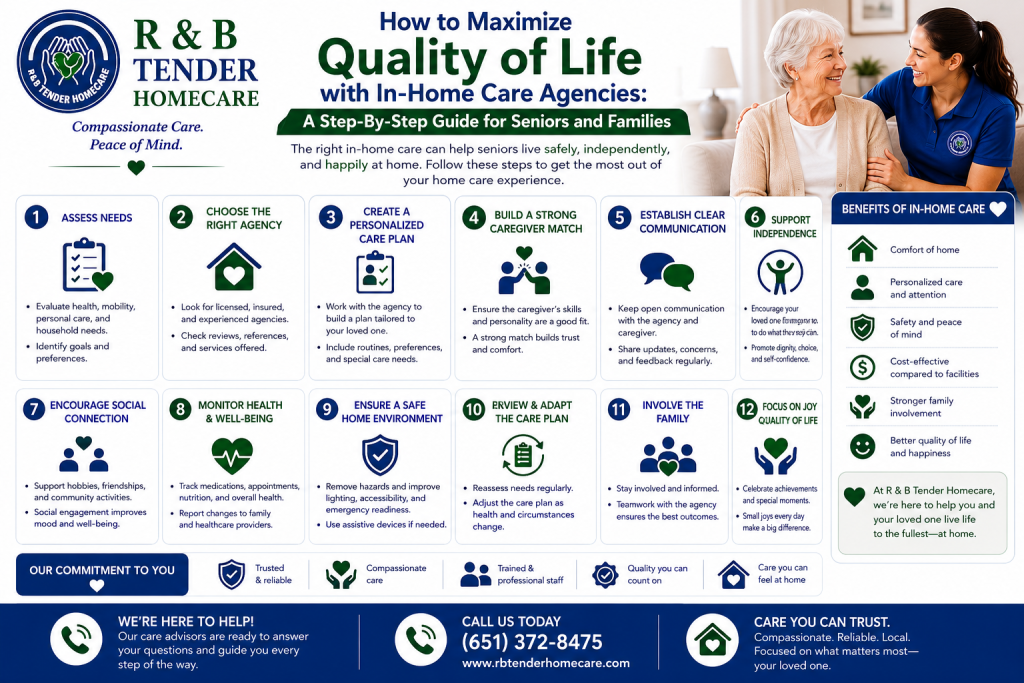
- Step 1 – Assess Your Loved One’s Needs
- Step 2 – Set Clear Quality-of-Life Goals
- Step 3 – Compare Qualified In-Home Care Agencies
- Step 4 – Build a Personalized Care Plan
- Step 5 – Create a Safe and Comfortable Home Environment
- Step 6 – Encourage Social Connection and Independence
- Step 7 – Monitor and Adjust the Care Plan
- Cost and Payment Considerations
- Home Care Services for Seniors in Minnesota
- ❓ Frequently Asked Questions
Introduction: How In-Home Care Can Support Quality of Life
For many older adults, remaining at home provides comfort, familiarity, privacy, and a sense of independence. However, daily tasks may become more difficult because of mobility changes, chronic conditions, memory concerns, or reduced energy.
That is where in-home care agencies can help.
Professional home care may provide assistance with personal routines, meals, mobility, housekeeping, companionship, transportation, and other everyday needs.
The goal should not simply be to keep a senior at home. A good care plan should help the person remain safe, engaged, respected, and as independent as possible.
Step 1 – Assess Your Loved One’s Needs
Before choosing a home care provider, complete a detailed assessment.
Consider:
- Mobility: Can the senior walk safely or transfer independently?
- Personal care: Is help needed with bathing, dressing, grooming, or toileting?
- Meals: Can the senior safely prepare nutritious meals?
- Medications: Are reminders or additional support needed?
- Cognitive health: Are there signs of memory loss or confusion?
- Emotional well-being: Is the senior lonely, anxious, or socially isolated?
- Home safety: Are stairs, bathrooms, lighting, or clutter creating risks?
Write down the most important concerns before contacting agencies. This makes it easier to explain your needs and compare services accurately.
Step 2 – Set Clear Quality-of-Life Goals
The best home care plan should have clear goals.
Examples include:
- Reduce fall risks inside the home.
- Maintain a consistent meal schedule.
- Improve personal hygiene routines.
- Support safe movement around the home.
- Increase social interaction.
- Help the senior attend appointments and community activities.
- Reduce stress on family caregivers.
Goals should focus on the senior’s priorities rather than simply completing tasks.
For example, a caregiver may help prepare lunch, but the larger goal may be improving nutrition while allowing the senior to remain involved in meal choices and preparation.
Step 3 – Compare Qualified In-Home Care Agencies
When searching for in-home care agencies near me, compare more than price.
Ask each provider about:
- Licensing or registration requirements applicable in your state
- Caregiver background checks
- Training and supervision
- Experience with seniors who have similar needs
- Backup caregivers
- Emergency procedures
- Scheduling flexibility
- Communication with families
- Caregiver matching
Also ask whether the same caregivers can visit regularly.
Consistency can be especially valuable for seniors with dementia, anxiety, or strong daily routines.
Questions to Ask Before Hiring an Agency
- How do you screen caregivers?
- Who supervises the care team?
- Can we request a different caregiver if the match is not right?
- What happens if the scheduled caregiver is unavailable?
- How do you handle emergencies?
- How are families updated about care?
Step 4 – Build a Personalized Care Plan
A strong care plan should reflect the senior’s health needs, preferences, schedule, and personality.
It may include:
- Morning or evening personal care
- Meal preparation
- Medication reminders
- Walking or mobility support
- Light housekeeping
- Laundry
- Errands
- Transportation
- Companionship
- Respite support for family caregivers
The schedule should also respect the senior’s normal routine.
Someone who enjoys sleeping late should not be forced into an unnecessarily early schedule simply because it is convenient for the caregiver.
Step 5 – Create a Safe and Comfortable Home Environment
Home care works best when the environment supports safe aging.
Families can review:
- Lighting in hallways and bedrooms
- Loose rugs and clutter
- Bathroom grab bars
- Stair safety
- Wheelchair or walker accessibility
- Frequently used items that may be difficult to reach
Ask the caregiver or agency whether they can help identify common safety concerns.
Simple adjustments can make daily routines easier and reduce unnecessary risks.
Step 6 – Encourage Social Connection and Independence
Quality of life includes more than physical safety.
Older adults also need purpose, social interaction, choice, and meaningful activities.
A caregiver may support:
- Conversation and companionship
- Walks
- Gardening
- Games and puzzles
- Reading
- Religious or community activities
- Visits with friends
- Hobbies
Whenever possible, caregivers should encourage seniors to do what they can independently rather than automatically completing every task for them.
Maintaining independence can help preserve confidence and dignity.
Step 7 – Monitor and Adjust the Care Plan
Senior care needs can change.
Families should regularly ask:
- Is the senior comfortable with the caregiver?
- Are scheduled visits being completed reliably?
- Has mobility improved or declined?
- Are meals and personal care needs being met?
- Has there been a fall, hospitalization, or new diagnosis?
- Does the current schedule provide enough support?
Update the care plan when circumstances change.
A senior who begins with a few weekly visits may later need daily assistance, while someone recovering from surgery may require less support over time.
Cost and Payment Considerations
The cost of home care services for seniors varies based on location, care level, visit length, schedule, and provider.
Ask for a written price sheet covering:
- Hourly rates
- Minimum visit requirements
- Weekend and holiday rates
- Overnight care
- Transportation charges
- Cancellation fees
Families may use private funds, long-term care insurance, or certain public benefit programs depending on eligibility and the type of services provided.
Always confirm coverage directly with the insurer, program, or agency.
Home Care Services for Seniors in Minnesota
Families exploring in-home care agencies in Minnesota should compare providers based on caregiver screening, available services, scheduling, communication, safety, and the senior’s personal needs.
R & B Tender Homecare provides information about home care, residential assisted living, and supportive senior care services in Minnesota.
A personalized conversation with a care provider can help families determine which level of support is appropriate for their loved one.
❓ Frequently Asked Questions
How can in-home care improve a senior’s quality of life?
In-home care can support safety, personal care, meals, mobility, companionship, daily routines, and independence while allowing seniors to remain in familiar surroundings.
How do I choose the best in-home care agency?
Compare caregiver screening, training, services, emergency procedures, scheduling flexibility, communication, pricing, and the agency’s ability to create a personalized care plan.
How often should a home care plan be reviewed?
Families should review the plan regularly and whenever there is a major change in health, mobility, medication needs, hospitalization, or family support.
What services can home care agencies provide?
Services may include personal care, meal preparation, housekeeping, mobility support, medication reminders, transportation, companionship, and respite care.
When should a family consider increasing home care hours?
Consider additional support if the senior begins having more falls, missed meals, difficulty with hygiene, increased confusion, medication concerns, or greater difficulty completing daily activities safely.