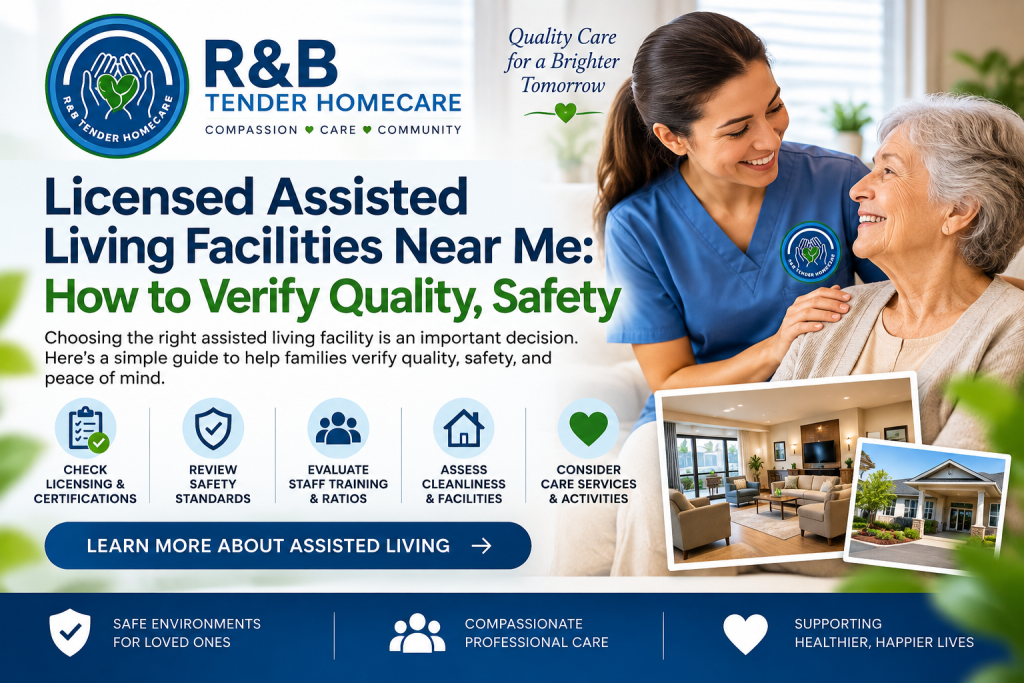
📋 Key Takeaways
- Understanding what “licensed” truly means helps families avoid unsafe or non‑compliant facilities.
- Seven quality indicators—staff training, ratios, medical partnerships, safety, nutrition, activities, and resident satisfaction—are the most reliable predictors of care quality.
- Public records, state health‑department portals, and Medicare/Medicaid lookup tools provide free, verifiable data on any licensed assisted living facilities near me.
- A 15‑step verification checklist turns research into a systematic, confidence‑building process.
- Red‑flag warning signs—repeated citations, staffing gaps, and poor communication—should trigger a second‑look before signing a contract.
📑 Table of Contents
- Opening Overview: Why verifying licensed assisted living facilities is critical for families
- What Does ‘Licensed’ Mean? State regulations, accreditation bodies, and inspection cycles
- Top 7 Quality Indicators to Check
- How to Access Public Records and Inspection Reports Online
- Questions to Ask During a Facility Tour
- Cost Transparency: Understanding pricing structures and what’s included
- Red Flags Specific to Licensed Facilities
- Checklist: 15‑Step Verification Process for Licensed Assisted Living Facilities Near Me
- Conclusion: Making an informed decision that aligns with health, budget, and lifestyle goals
- Frequently Asked Questions
Opening Overview: Why verifying licensed assisted living facilities is critical for families
Choosing a senior living option is one of the most emotionally charged decisions families face. A licensed assisted living facility promises compliance with state health and safety standards, yet not every license guarantees high‑quality care. According to the National Center for Assisted Living, 12% of facilities receive a “significant deficiency” citation each year, underscoring the need for diligent verification.
By systematically confirming quality, safety, and compliance, families protect their loved ones from preventable injuries, medication errors, and financial exploitation. This guide equips you with the tools to turn the vague phrase “licensed assisted living facilities near me” into a concrete, data‑driven shortlist.
What Does ‘Licensed’ Mean? State regulations, accreditation bodies, and inspection cycles
Licensing is a state‑level endorsement that a facility meets baseline standards for staffing, building safety, and resident rights. Each state issues its own license, often overseen by a department of health or aging services.
- Core requirements: Minimum staff‑to‑resident ratios, background checks, fire safety systems, and resident care plans.
- Accreditation: Voluntary programs such as CARF (Commission on Accreditation of Rehabilitation Facilities) or The Joint Commission add a layer of quality assurance beyond the state license.
- Inspection cycles: Most states conduct annual unannounced inspections and quarterly self‑reporting. Inspection reports are public and detail any citations, corrective actions, and follow‑up dates.
Understanding these layers helps you differentiate a merely “licensed” community from one that consistently exceeds standards.
Top 7 Quality Indicators to Check
While every facility will list its amenities, the following seven indicators are proven predictors of resident well‑being.
1. Staff training and turnover rates
- Facilities with annual dementia‑care training for all direct‑care staff show a 20% lower rate of resident falls (AARP, 2023).
- Turnover rates above 30% often signal low morale and inconsistent care. Request the past 12‑month turnover statistics.
2. Resident‑to‑staff ratios
Best‑practice guidelines recommend 1:8 during daytime and 1:12 at night for assisted living. Ratios tighter than this correlate with higher satisfaction scores.
3. Health‑care partnerships and on‑site medical services
- On‑site nurse practitioners or regular visits from a primary‑care physician reduce emergency‑room transfers by up to 35%.
- Partnerships with local hospitals or home‑health agencies provide seamless medication management and wound care.
4. Safety protocols (fire drills, emergency response)
Look for documented quarterly fire drills, sprinkler system certifications, and an emergency response plan that includes personal emergency call systems for each resident.
5. Nutritional standards and meal planning
- Facilities must meet state nutrition guidelines and offer at least three balanced meals daily.
- Menus that accommodate diabetic, low‑sodium, and texture‑modified diets indicate a robust dietary department.
6. Activity programming and mental‑health support
Evidence‑based programs—such as reminiscence therapy, music therapy, and regular physical exercise—reduce depression scores by 15% among residents (Journal of Gerontology, 2022).
7. Resident satisfaction surveys and complaint resolution
Look for publicly posted quarterly satisfaction scores and a clear, documented process for handling complaints within 48 hours.
How to Access Public Records and Inspection Reports Online
All reputable states provide free access to licensing and inspection data. Here’s how to locate it quickly.
State health department portals
- Visit your state’s Department of Health or Department of Aging website.
- Search using the facility name or the phrase “licensed assisted living facilities near me.”
- Download the most recent inspection report; it will list citations, corrective actions, and follow‑up dates.
Medicare/Medicaid provider lookup tools
The CMS (Centers for Medicare & Medicaid Services) maintains a Care Compare database. Filter by “Assisted Living” and “Licensed” to see reimbursement rates, quality star ratings, and any federal compliance issues.
Third‑party rating websites and their methodology
Sites like Care.com, Nursing Home Compare, and SeniorAdvisor aggregate state inspection data, resident reviews, and staffing information. Check their methodology sections to ensure they weight official citations heavily.
Questions to Ask During a Facility Tour
A tour is your chance to verify the data you’ve collected. Bring a notebook and ask the following.
Facility cleanliness and maintenance
- Are common areas disinfected multiple times daily?
- When was the last HVAC filter change?
Observation of staff‑resident interactions
Watch for respectful communication, eye contact, and timely assistance. High‑quality facilities encourage staff to spend at least 15 minutes per resident per shift on personalized engagement.
Review of care plans and medication management
- Can you see a sample care plan that includes resident goals, medication schedules, and emergency contacts?
- How are medication errors reported and corrected?
Evaluation of safety features (grab bars, fall‑prevention tech)
Check bathrooms, hallways, and resident rooms for sturdy grab bars, non‑slip flooring, and sensor‑based fall‑alert systems.
Cost Transparency: Understanding pricing structures and what’s included
Pricing varies widely based on location, services, and level of care. Clear breakdowns prevent surprise bills.
Base fees vs. ancillary services
- Base fee: Covers room, meals, housekeeping, and basic social activities.
- Ancillary services: Physical therapy, medication administration, and 24‑hour nursing are billed separately.
Financial assistance options (Veterans benefits, Medicaid waivers)
Many states offer Medicaid waivers for assisted living, and the VA provides Aid & Attendance benefits for eligible veterans. Ask the facility’s financial counselor for a written estimate that includes any applicable subsidies.
Red Flags Specific to Licensed Facilities
Even a licensed community can harbor hidden problems. Keep an eye out for the following warning signs.
History of violations or citations
Multiple “significant deficiency” citations within the past two years—especially for staffing or infection control—should trigger a deeper investigation.
Inconsistent staffing levels
If you notice fewer staff members than the advertised ratio during a tour, request the most recent staffing logs.
Lack of clear communication channels
Facilities that do not provide a dedicated family liaison or a written grievance policy often struggle with timely issue resolution.
Checklist: 15‑Step Verification Process for Licensed Assisted Living Facilities Near Me
- Define your loved one’s care level (ADL assistance, memory care, medical needs).
- Search “licensed assisted living facilities near me” on your state health department portal.
- Download the latest inspection report and note any citations.
- Verify accreditation (CARF, The Joint Commission) on the facility’s website.
- Request staff turnover data for the past 12 months.
- Confirm resident‑to‑staff ratios for day and night shifts.
- Ask about on‑site medical partnerships and nurse‑practitioner availability.
- Review the emergency response plan and fire‑drill schedule.
- Obtain a sample weekly menu and confirm dietary accommodations.
- Inspect activity calendars for evidence‑based mental‑health programs.
- Read the most recent resident satisfaction survey results.
- Check Medicare/Medicaid provider status via Care Compare.
- Schedule a tour; observe cleanliness, safety features, and staff interactions.
- Ask to see a resident’s individualized care plan (with privacy protections).
- Request a detailed cost breakdown, including base fees and ancillary services.
- Document any red flags and compare against at least three other facilities.
Completing this checklist transforms a vague internet search into a confident, data‑backed decision.
Conclusion: Making an informed decision that aligns with health, budget, and lifestyle goals
Verifying a licensed assisted living facility near me is not a one‑time task; it’s a systematic process that blends public data, on‑site observation, and transparent financial discussions. By focusing on the seven quality indicators, leveraging state and federal record portals, and applying the 15‑step