Key Takeaways
- Burnout is physical, emotional and mental exhaustion that builds up when caregiving demands exceed the support available.
- It is common, it is not a character flaw, and it does not mean you love the person any less.
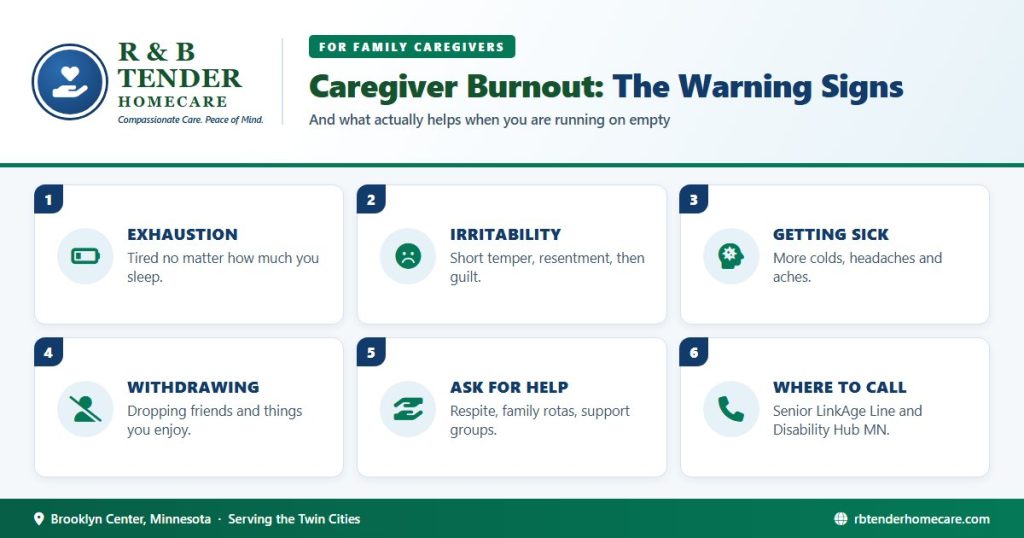
- Early signs are easy to dismiss: tiredness, irritability, frequent minor illness and withdrawing from friends.
- Practical help exists in Minnesota, including respite care, support groups, counseling and assessment for paid services.
- The most effective step is also the hardest: accepting help before you are forced to.
Table of Contents
Family caregivers tend to describe themselves as fine. They are managing. Then one day they are not: a minor illness becomes a week in bed, a small frustration becomes a shouting match, or the thought of another day feels impossible. That is burnout, and it rarely arrives without warning.
This article sets out the signs of caregiver burnout, explains why it happens, and lists the supports available to family caregivers in Minnesota. If you are reading this on behalf of someone else, it may help you start the conversation.
What Caregiver Burnout Is
Burnout is a state of exhaustion that develops when the demands of caring go on for longer, and with less support, than a person can sustain. It affects the body, the emotions and the ability to think clearly. It is different from ordinary tiredness because rest alone does not fix it.
It is extremely common. Most people caring for a parent, spouse or child with significant needs will experience some of these signs at some point.
Ten Warning Signs
- Constant tiredness that sleep does not relieve.
- Irritability, a short temper, and feelings of resentment followed by guilt.
- Getting ill more often: colds, headaches, stomach problems, back pain.
- Changes in sleep or appetite, in either direction.
- Withdrawing from friends, hobbies and things that used to bring pleasure.
- Difficulty concentrating or making simple decisions.
- Anxiety that does not switch off, or a persistent low mood.
- Feeling trapped, hopeless, or that nothing you do is enough.
- Neglecting your own health: missed appointments, skipped meals, more alcohol.
- Thoughts of harming yourself or the person you care for. This needs immediate help. Call or text 988 at any time.
Why It Happens
- No end point. Unlike a job, caregiving has no shift that ends.
- Role confusion. Being a daughter and a nurse, or a husband and a carer, at the same time.
- Isolation. Caregivers lose contact with people who are not involved.
- Unrealistic expectations. Believing that doing it all yourself is the only acceptable way.
- Lack of control. Illness does not follow a plan.
- Money and work. Reduced hours or lost income add pressure that is rarely talked about.
What Actually Helps
Respite care
A planned, regular break is the single most effective support. In Minnesota, respite can be arranged privately or through waiver programs when it is in the person’s support plan.
Sharing the load
Make a list of everything you do in a week and ask other family members to take specific items. People say yes more often to “can you take Dad to his Thursday appointment” than to “can you help more”.
Paid services
An assessment through your county or tribal agency can open the door to services such as personal care, homemaker help, adult day programs and night supervision.
Support groups
Talking to people in the same position reduces the isolation faster than almost anything else. Many are free and some meet online.
Your own doctor
Burnout affects physical health. Tell your doctor that you are a caregiver. Counseling helps, and it is not a sign of weakness to use it.
Protecting the basics
Sleep, meals, movement and one thing each week that is just for you. These are not luxuries. They are what keeps the caregiving going.
Where to Call in Minnesota
- Senior LinkAge Line — free help for older Minnesotans and their caregivers to find services and support.
- Disability Hub MN — free help for people with disabilities and their families.
- Your county or tribal human services agency — for an assessment and access to waiver programs.
- 988 Suicide and Crisis Lifeline — call or text at any time if you are in crisis.
When More Help Is the Right Answer
For some families, the point comes when the care needed is more than one household can provide, especially when it includes nights. Arranging more help, whether that is services at home or a move to a licensed setting, is not giving up. It is recognizing what the situation needs.
The people who manage this best are those who looked at the options early, while they still had the energy to choose well.
Frequently Asked Questions
What are the first signs of caregiver burnout?
Tiredness that sleep does not fix, irritability, getting ill more often, and withdrawing from friends and activities.
Is caregiver burnout the same as depression?
They overlap and burnout can lead to depression. Persistent low mood, hopelessness or thoughts of self-harm should be discussed with a doctor straight away.
What help is available for family caregivers in Minnesota?
Respite care, support groups, counseling, and paid services through waiver programs following an assessment by your county or tribal agency.
How do I ask family members for help?
Ask for specific tasks on specific days rather than general help. People respond better to a clear request.
Who do I call in a crisis?
Call or text 988 at any time. If someone is in immediate danger, call 911.
Talk to R & B 245D Support
R & B 245D provides licensed 245D basic support services under the Minnesota Department of Human Services. If you are working out which services fit, we can walk through it with you and your case manager.
This article is general information for families and professionals in Minnesota. It is not medical, legal or financial advice. Programs, rules and eligibility change, so confirm the details with your county or tribal agency, the Minnesota Department of Health or the Minnesota Department of Human Services before you make a decision.