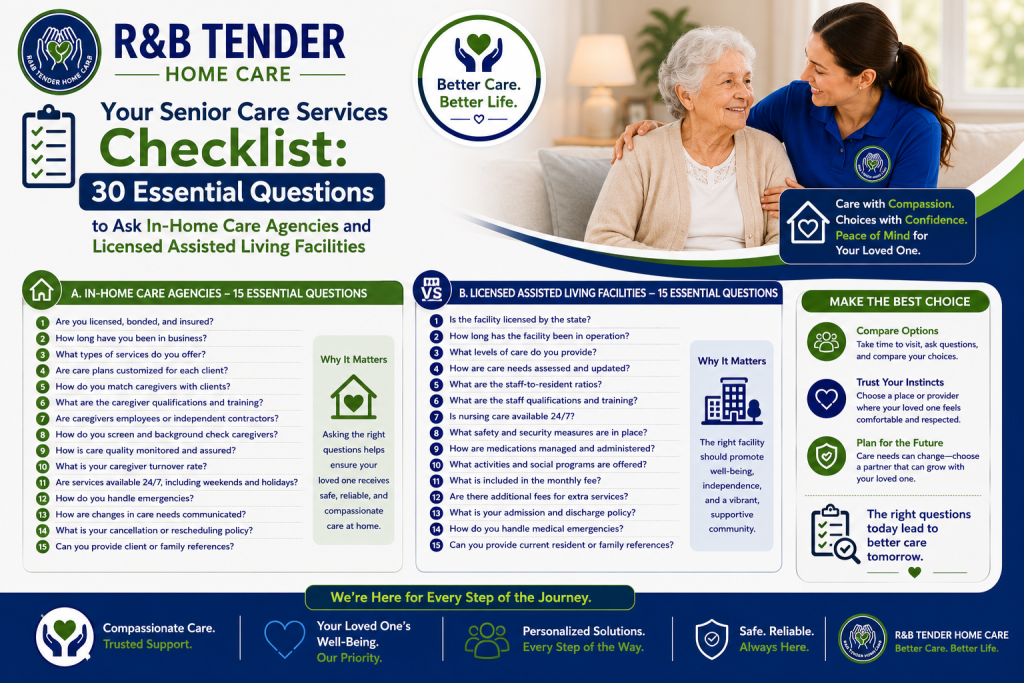
📋 Key Takeaways
- When searching for senior care services, it’s essential to ask the right questions to ensure you find the best fit for your loved one.
- In-home care agencies and licensed assisted living facilities offer different types of care and support services, so it’s crucial to understand their differences.
- Staff training, safety, and security are critical factors to consider when evaluating senior care services.
- Cost and payment options vary widely among providers, so it’s vital to ask about these details to avoid surprises.
- By asking the right questions and doing your research, you can make an informed decision and find the perfect senior care services for your loved one.
📑 Table of Contents
Introduction to Senior Care Services and the Importance of Asking Questions
When it comes to senior care services, there are many options available, and it can be overwhelming to navigate the different types of care and support services. According to the National Institute on Aging, approximately 70% of people turning 65 will need some form of long-term care. With so many options available, it’s essential to ask the right questions to ensure you find the best fit for your loved one. You can start by researching assisted living facilities near me or in-home care agencies to determine which type of care is best for your loved one.
Why Asking Questions is Crucial
Asking questions is crucial when evaluating senior care services because it helps you understand the level of care and support provided, the qualifications and training of the staff, and the overall quality of the facility or agency. By asking the right questions, you can make an informed decision and avoid potential pitfalls. For example, you can ask about the staff-to-resident ratio, the types of activities and programs offered, and the level of medical care provided.
Questions to Ask About Care and Support Services
When evaluating senior care services, it’s essential to ask about the types of care and support services provided. Some questions to ask include:
- What types of care and support services are provided, such as personal care, medication management, and transportation?
- Are there any specialized programs or services, such as dementia care or rehabilitation therapy?
- How are care plans developed, and who is involved in the planning process?
- What is the staff-to-resident ratio, and how does it impact the level of care provided?
You can learn more about the different types of care and support services by reading our ultimate guide to senior care services.
Questions to Ask About Staff and Training
The staff and training provided by senior care services are critical factors to consider. Some questions to ask include:
- What is the qualifications and experience of the staff, including caregivers, nurses, and administrators?
- What type of training is provided to staff, and how often is it provided?
- Are staff certified in areas such as CPR, first aid, and dementia care?
- How does the facility or agency handle staffing ratios and ensure that residents receive adequate care?
You can also ask about the staff’s approach to care and how they interact with residents. For example, do they use a person-centered approach, and do they encourage resident participation in care planning?
Questions to Ask About Safety and Security
Safety and security are top priorities when evaluating senior care services. Some questions to ask include:
- What safety features are in place, such as emergency response systems, smoke detectors, and secure doors?
- How does the facility or agency handle emergencies, such as natural disasters or power outages?
- Are residents allowed to leave the facility or agency, and if so, how is their safety ensured?
- What is the policy on medication management, and how are medications stored and administered?
You can learn more about safety and security in senior care services by reading our article on home care services for seniors.
Questions to Ask About Cost and Payment Options
Cost and payment options are essential factors to consider when evaluating senior care services. Some questions to ask include:
- What are the costs associated with care, and what services are included in the cost?
- Are there any additional fees or charges, such as for transportation or activities?
- What payment options are available, such as private pay, Medicaid, or veterans’ benefits?
- How does the facility or agency handle financial planning and budgeting for residents?
You can also ask about any financial assistance programs or scholarships that may be available.
Conclusion and Final Tips
Evaluating senior care services can be a daunting task, but by asking the right questions, you can make an informed decision and find the best fit for your loved one. Remember to consider factors such as care and support services, staff and training, safety and security, and cost and payment options. You can also read our article on finding the perfect fit to learn more about choosing the right senior care services for your loved one.
❓ Frequently Asked Questions
Q: What is the difference between in-home care agencies and licensed assisted living facilities?
In-home care agencies provide care and support services in the comfort of the resident’s own home, while licensed assisted living facilities provide care and support services in a communal living setting.
Q: How do I know which type of senior care service is best for my loved one?
You can determine which type of senior care service is best for your loved one by evaluating their care needs, lifestyle, and preferences. You can also consult with a healthcare professional or geriatric care manager for guidance.
Q: What are the benefits of using a senior care service?
The benefits of using a senior care service include increased safety and security, socialization and companionship, and access to medical care and support services.
Q: How do I pay for senior care services?
There are several payment options available for senior care services, including private pay, Medicaid, veterans’ benefits, and long-term care insurance.
Q: Can I customize my loved one’s care plan to meet their individual needs?
Yes, most senior care services allow you to customize your loved one’s care plan to meet their individual needs and preferences.